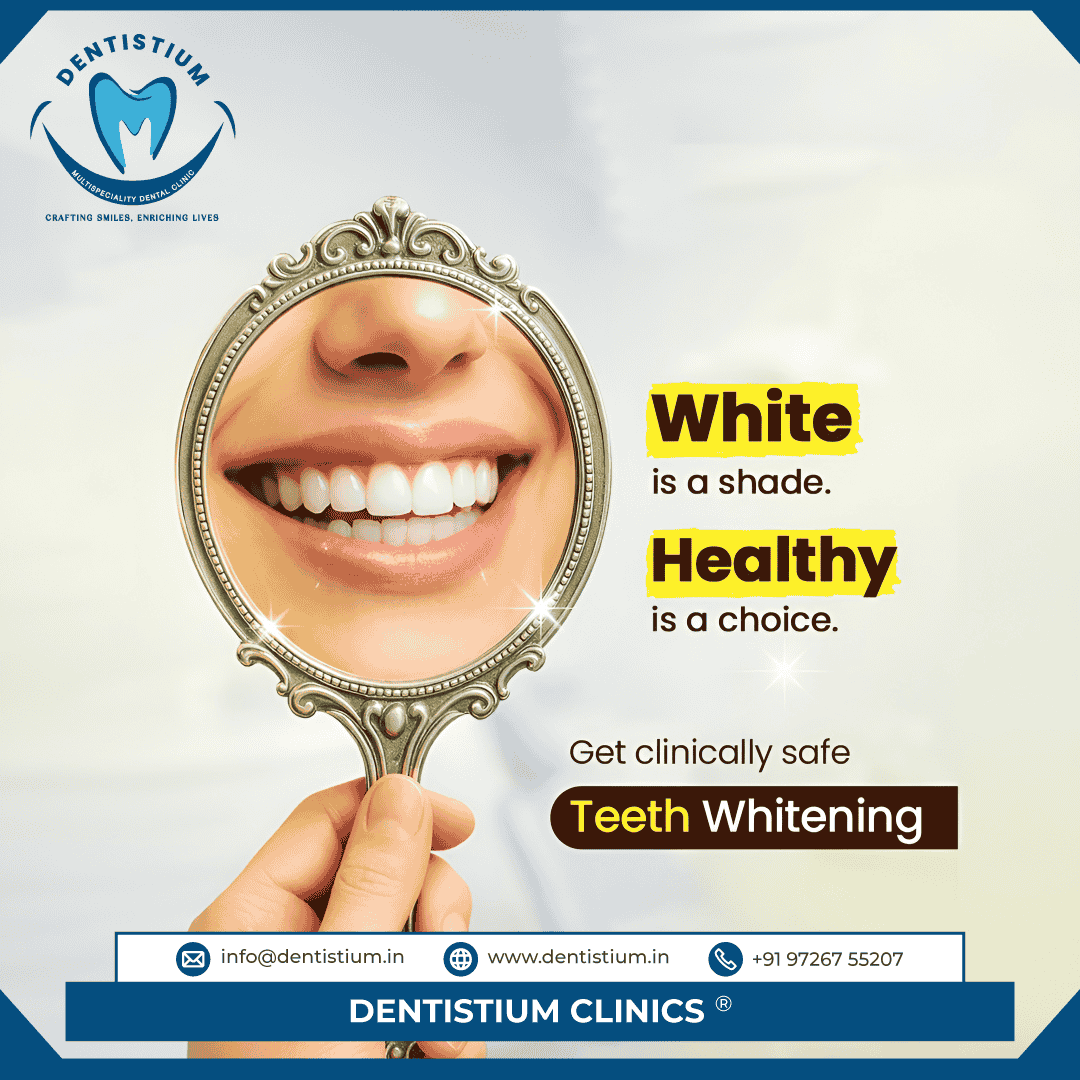
White is a Shade, Healthy is a Choice
White is a Shade, Healthy is a Choice – The Truth About Teeth Whitening
A bright smile is often associated with confidence, youth, and good health. Many people believe that the whiter their teeth are, the healthier they must be. However, the truth is simple: white is a shade, but healthy is a choice.
Teeth whitening has become one of the most popular cosmetic dental treatments in the world. While having whiter teeth can enhance your smile, maintaining strong and healthy teeth should always be the priority. Professional teeth whitening done under dental supervision ensures both beauty and safety for your smile.
Let’s explore everything you need to know about teeth whitening, oral health, and why choosing clinically safe whitening treatments matters.
Why Do Teeth Become Yellow or Stained?
Even if you brush regularly, teeth can still become stained over time. Several factors contribute to discoloration.
1. Food and Beverages
Certain foods and drinks contain pigments that stain tooth enamel, including:
Coffee
Tea
Red wine
Soda
Dark berries
Sauces like soy sauce and tomato sauce
These substances gradually attach to the enamel, making teeth appear dull or yellow.
2. Smoking and Tobacco
Tobacco products are one of the biggest causes of stubborn tooth stains. Nicotine and tar penetrate enamel and cause deep discoloration that is difficult to remove without professional treatment.
3. Poor Oral Hygiene
Irregular brushing and flossing allow plaque and tartar to build up, making teeth look darker.
4. Aging
As we age, enamel becomes thinner, revealing the natural yellowish dentin beneath the tooth surface.
5. Certain Medications
Some antibiotics and medical treatments can cause tooth discoloration, especially if taken during childhood.
The Difference Between White Teeth and Healthy Teeth
Many people focus only on the appearance of white teeth, but color alone does not determine oral health.
A healthy smile means:
Strong enamel
Healthy gums
No cavities
No plaque buildup
Proper bite alignment
It is possible for someone to have very white teeth but still have gum disease or cavities. That’s why dentists always recommend addressing oral health before cosmetic treatments.
What is Professional Teeth Whitening?
Professional teeth whitening is a clinically safe cosmetic dental procedure performed by trained dentists to lighten the color of teeth.
Unlike over-the-counter products, professional whitening treatments use controlled and safe whitening agents that effectively remove deep stains without damaging enamel.
Benefits include:
Noticeably brighter smile
Fast results
Safe and supervised treatment
Even whitening across all teeth
Minimal sensitivity
Why Choose Professional Whitening Instead of DIY Kits?
Many whitening products are available online and in stores, but they often come with risks.
Over-the-Counter Whitening Risks
DIY whitening kits can sometimes cause:
Tooth sensitivity
Gum irritation
Uneven whitening
Enamel damage if overused
Since these products are not customized for your teeth, results can vary and sometimes cause discomfort.
Dentist-Supervised Whitening
Professional whitening treatments ensure:
✔ Safe chemical concentrations
✔ Customized treatment
✔ Protection for gums and enamel
✔ Faster and more effective results
This is why dentists always recommend clinically supervised whitening treatments.
How the Teeth Whitening Process Works
Professional whitening is a simple and comfortable procedure.
Step 1: Dental Examination
Your dentist examines your teeth and gums to ensure they are healthy enough for whitening.
Step 2: Cleaning
Plaque and tartar are removed so the whitening treatment works effectively.
Step 3: Whitening Application
A specialized whitening gel is applied to the teeth, which breaks down stains and lightens the enamel.
Step 4: Activation
In some treatments, a special light or laser activates the whitening agent to enhance results.
Step 5: Immediate Results
Most patients notice their teeth becoming several shades whiter after just one session.
How Long Do Whitening Results Last?
Professional teeth whitening results can last 6 months to 2 years, depending on lifestyle habits.
To maintain results:
Brush twice daily
Floss regularly
Limit coffee, tea, and wine
Avoid smoking
Visit your dentist for regular cleanings
Touch-up treatments can help keep your smile bright.
Tips to Maintain a Healthy and Bright Smile
Whitening treatments are effective, but maintaining oral health requires daily care.
Brush Properly
Brush twice a day using fluoride toothpaste to remove plaque and prevent staining.
Floss Daily
Flossing removes food particles and bacteria from areas a toothbrush cannot reach.
Drink More Water
Water helps wash away staining substances and keeps your mouth hydrated.
Eat Teeth-Friendly Foods
Crunchy fruits and vegetables like apples and carrots help naturally clean teeth.
Visit Your Dentist Regularly
Regular dental checkups ensure early detection of problems and keep your smile healthy.
A Beautiful Smile Starts With Healthy Teeth
While a bright smile can boost your confidence, the foundation of every beautiful smile is good oral health.
Teeth whitening should always be done safely and professionally, ensuring your teeth remain strong while improving their appearance.
Remember the message:
White is a shade. Healthy is a choice.
When you prioritize dental health and choose professional care, you invest in a smile that is not only brighter but also stronger and healthier.
Transform Your Smile with Safe Teeth Whitening
If you’re looking for a brighter smile without compromising oral health, professional teeth whitening is the perfect solution.
At Dentistium Clinics, we provide clinically safe teeth whitening treatments designed to enhance your smile while protecting your dental health.
Let your smile shine with confidence.

 Ahmedabad, Gujarat
 +91 97267 55207