Indications for Root Canal Treatment: When and Why It Becomes Necessary
Root canal treatment (RCT) is a common and highly effective dental procedure designed to save a tooth that is severely infected or damaged. Many people associate root canals with pain, but in reality, the procedure is performed to relieve pain and restore oral health. Understanding the indications for root canal treatment can help you seek timely care and prevent further complications.
What Is Root Canal Treatment?
Inside every tooth is a soft tissue called the pulp, which contains nerves, blood vessels, and connective tissue. When this pulp becomes inflamed or infected due to decay, trauma, or cracks, it cannot heal on its own. Root canal treatment involves removing the infected pulp, cleaning and disinfecting the inner canals, and sealing the tooth to prevent reinfection. This allows you to retain your natural tooth rather than having it extracted.
Main Indications for Root Canal Treatment
1. Irreversible Pulpitis (Severe Tooth Pain)
One of the most common reasons for root canal treatment is irreversible pulpitis. This condition occurs when the pulp is inflamed beyond recovery. Patients often experience:
-
Severe, lingering pain
-
Pain that worsens at night
-
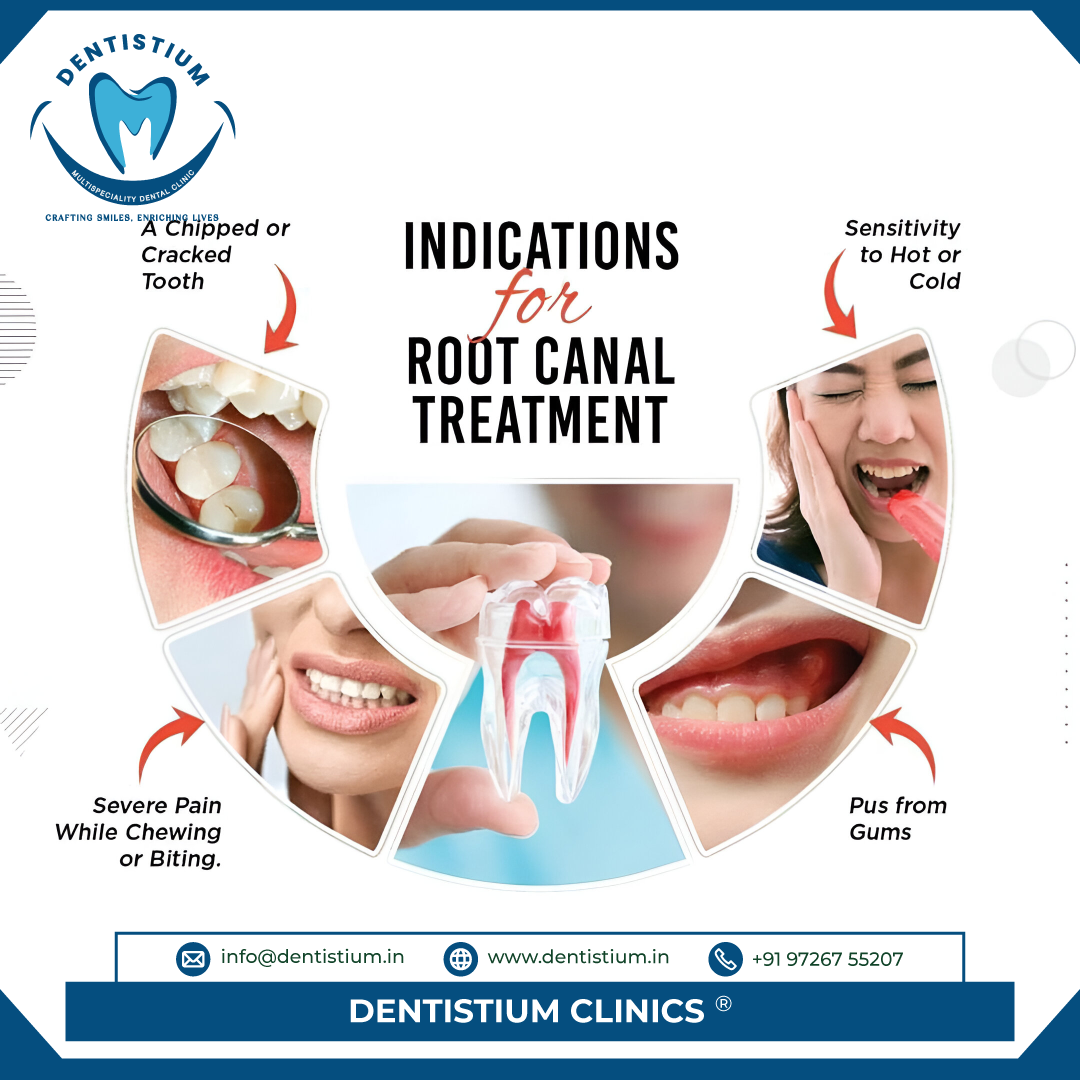
Sensitivity to hot or cold that lasts for a long time
If untreated, the inflammation can progress to infection and pulp death.
2. Pulp Necrosis (Dead Pulp)
When the blood supply to the pulp is cut off due to deep decay or trauma, the pulp tissue dies. This condition is called pulp necrosis. Signs may include:
-
Tooth discoloration
-
No response to temperature tests
-
Pain when biting or tapping the tooth
Even if there is no pain, a necrotic pulp can lead to infection spreading to surrounding tissues.
3. Periapical Infection or Dental Abscess
If infection spreads beyond the pulp into the surrounding bone, it can cause a periapical abscess. Symptoms include:
-
Swelling of the gums or face
-
Pus discharge from the gums
-
Tenderness while chewing
-
Formation of a sinus tract (gum boil)
This condition requires immediate treatment to prevent further spread of infection.
4. Deep Dental Caries (Advanced Tooth Decay)
When cavities extend deep into the tooth and reach the pulp, simple fillings are no longer sufficient. In such cases, root canal treatment is necessary to remove the infected pulp and preserve the remaining tooth structure.
5. Chipped or Cracked Tooth
A crack or fracture in the tooth can expose the pulp to bacteria. Even if the crack is not visibly large, it can allow infection to enter. Trauma from accidents, sports injuries, or biting hard objects may result in pulp damage requiring root canal therapy.
6. Repeated Dental Procedures on the Same Tooth
Teeth that have undergone multiple restorations (fillings, crowns, or other procedures) may develop pulp irritation over time. Continuous stress on the pulp can eventually lead to inflammation or infection, making RCT necessary.
7. Dental Trauma
Injuries such as falls or blows to the mouth can damage the pulp even if there is no visible fracture. A traumatized tooth may gradually darken or become painful, indicating internal damage that requires root canal treatment.
8. Internal Resorption
Internal resorption is a condition where the tooth structure begins to break down from the inside. Root canal treatment helps stop the resorptive process and preserves the tooth.
Why Early Treatment Is Important
Delaying root canal treatment can result in:
-
Severe infection
-
Spread of infection to adjacent teeth or jawbone
-
Tooth loss
-
Increased treatment complexity and cost
Timely intervention not only relieves pain but also prevents serious complications.
Benefits of Root Canal Treatment
-
Eliminates pain and infection
-
Preserves natural tooth structure
-
Restores chewing function
-
Prevents shifting of adjacent teeth
-
Maintains natural appearance
With modern techniques and anesthesia, root canal treatment is as comfortable as getting a routine filling.
Conclusion
Root canal treatment is indicated when the dental pulp becomes irreversibly inflamed, infected, or necrotic due to deep decay, trauma, cracks, or repeated dental procedures. Common signs include severe tooth pain, prolonged sensitivity to hot or cold, swelling, pus discharge, and pain while chewing. Recognizing these symptoms early and seeking prompt dental care can help save your natural tooth and maintain long-term oral health.
If you experience persistent tooth pain or any of these symptoms, consult your dentist immediately for proper diagnosis and treatment.