what happen when you grind your teeth
What Happens When You Grind Your Teeth?
Teeth grinding—also known as bruxism—is more common than most people realize. Many people clench or grind their teeth occasionally, especially during stressful moments. However, when it becomes frequent or happens during sleep, it can lead to serious dental and health issues.
If you often wake up with jaw pain, headaches, or notice your teeth looking worn down, you might be grinding your teeth without even knowing it.
Let’s explore what happens when you grind your teeth and why it’s important to address it early.
What Is Teeth Grinding (Bruxism)?
Bruxism is the involuntary clenching, grinding, or gnashing of teeth. It can occur:
During the day (Awake bruxism) – Often linked to stress, anxiety, or concentration.
During sleep (Sleep bruxism) – Usually unconscious and more damaging because of prolonged pressure.
Many people discover they grind their teeth only after their dentist points out signs of wear or their partner hears grinding sounds at night.
What Happens When You Grind Your Teeth?
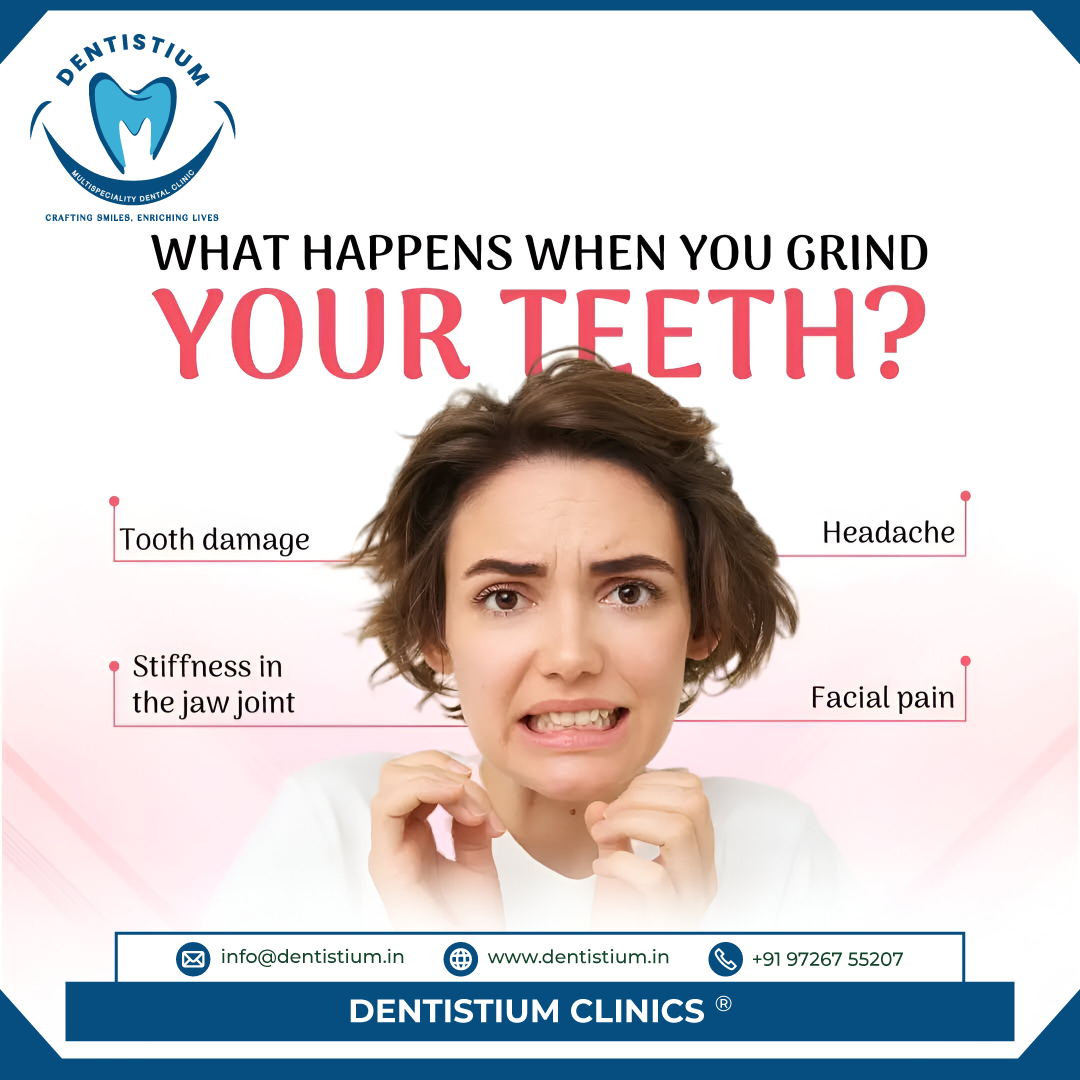
Teeth are strong—but they are not designed to withstand constant grinding pressure. Over time, bruxism can cause several complications.
1. Tooth Damage
Grinding wears down the protective enamel layer of your teeth. Once enamel is lost, it does not grow back.
Consequences include:
Flattened or chipped teeth
Cracked enamel
Increased tooth sensitivity
Higher risk of cavities
Tooth fractures in severe cases
In extreme situations, teeth may require crowns, root canal treatment, or even extraction.
2. Stiffness in the Jaw Joint
Your jaw joint (TMJ – Temporomandibular Joint) connects your jaw to your skull. Continuous clenching overworks this joint and the surrounding muscles.
You may experience:
Jaw stiffness
Difficulty opening or closing your mouth
Clicking or popping sounds
Locking of the jaw
If left untreated, this can develop into a temporomandibular disorder (TMD).
3. Headaches
Frequent grinding puts intense pressure on facial and jaw muscles. This tension often radiates upward, causing:
Morning headaches
Tension-type headaches
Pain around the temples
Many patients don’t realize their recurring headaches are linked to nighttime grinding.
4. Facial Pain
Bruxism can strain facial muscles, leading to:
Pain in cheeks and jaw
Earache-like discomfort
Neck and shoulder tension
Tenderness while chewing
Over time, this muscular strain can significantly affect your daily comfort and quality of life.
Why Do People Grind Their Teeth?
There isn’t just one cause. Bruxism is usually linked to a combination of factors:
Stress and anxiety
Sleep disorders
Abnormal bite (malocclusion)
Missing or misaligned teeth
Lifestyle habits (excess caffeine, alcohol, smoking)
Certain medications
Stress remains one of the most common triggers, especially in adults.
Long-Term Effects of Untreated Teeth Grinding
Ignoring bruxism can lead to:
Severe enamel loss
Shortened teeth
Gum recession
Increased tooth sensitivity
Jaw joint damage
Chronic pain disorders
The earlier you intervene, the easier it is to prevent permanent damage.
Signs You Might Be Grinding Your Teeth
Watch for these warning signs:
Waking up with jaw soreness
Teeth that look worn or flattened
Increased tooth sensitivity
Frequent morning headaches
Cracks or chips without trauma
Your partner hearing grinding sounds at night
A dental examination can confirm the diagnosis.
How to Stop or Manage Teeth Grinding
The good news is that bruxism is manageable. Treatment depends on the cause and severity.
1. Night Guard (Mouth Guard)
A custom-made dental night guard protects your teeth by creating a barrier between upper and lower teeth. It:
Prevents further enamel wear
Reduces jaw strain
Minimizes muscle tension
Custom guards are far more effective and comfortable than over-the-counter options.
2. Stress Management
Since stress is a major trigger, techniques such as:
Meditation
Deep breathing
Regular exercise
Yoga
Counseling
can significantly reduce grinding episodes.
3. Correcting Bite Issues
If misalignment is contributing, your dentist may recommend:
Orthodontic treatment
Restorative procedures
Adjustments to your bite
4. Lifestyle Changes
Small changes can make a difference:
Limit caffeine and alcohol
Avoid chewing gum
Reduce screen time before bed
Maintain a proper sleep routine
When Should You See a Dentist?
You should schedule a dental consultation if:
You notice jaw pain or stiffness
Your teeth appear worn down
You experience frequent headaches
Someone tells you that you grind your teeth at night
Early intervention prevents expensive and complex treatments later.
Final Thoughts
Teeth grinding may seem harmless at first, but over time it can lead to tooth damage, jaw stiffness, headaches, and facial pain. Because many people grind their teeth unknowingly—especially during sleep—regular dental checkups are essential.
If you suspect you’re grinding your teeth, don’t ignore the signs. Protecting your smile today can prevent long-term discomfort and costly dental procedures tomorrow.
Your teeth are meant to last a lifetime—take care of them before the damage becomes permanent.