🦷 5 Signs You Might Have a Cavity – Don’t Ignore Them!

Signs You Might Have a Cavity: Early Warning Signs You Should Never Ignore

A cavity is one of the most common dental problems affecting people of all ages. While cavities often begin silently, they can quickly progress into painful infections and serious tooth damage if left untreated. Recognizing the early signs of tooth decay can help you seek treatment before the problem worsens.

What Is a Cavity?

A cavity is a permanently damaged area in the hard surface of a tooth that develops into tiny openings or holes. Cavities occur when plaque bacteria produce acids that gradually erode the tooth enamel. Poor oral hygiene, frequent snacking on sugary foods, and inadequate fluoride exposure can increase the risk of developing cavities.

Common Signs You Might Have a Cavity

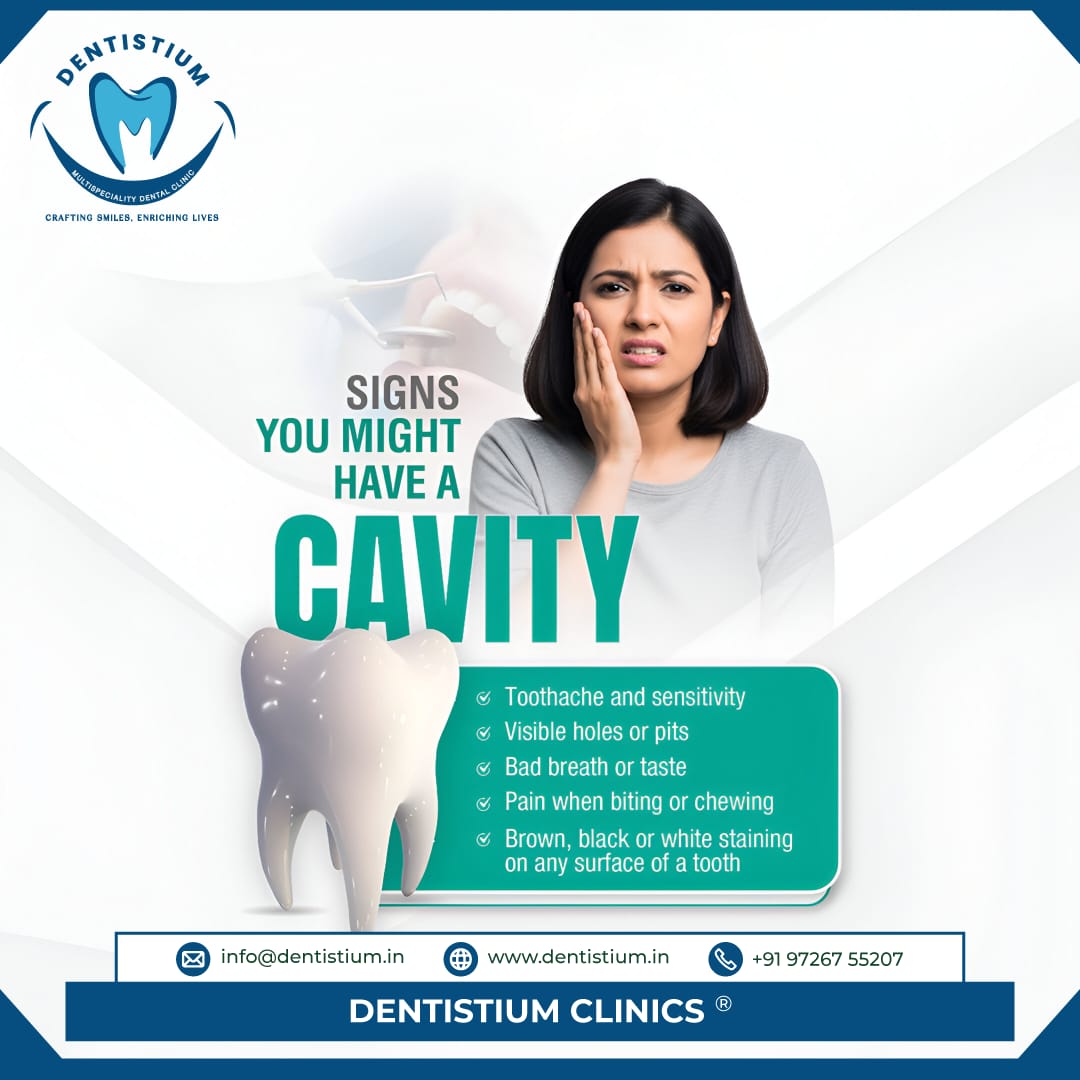
1. Toothache or Tooth Sensitivity

One of the earliest signs of a cavity is sensitivity to hot, cold, sweet, or acidic foods and beverages. As decay progresses, you may experience persistent tooth pain even when you’re not eating or drinking.

2. Visible Holes or Pits in Your Teeth

If you notice small holes, pits, or rough spots on the surface of your teeth, they may indicate tooth decay. These visible changes should be examined by a dental professional as soon as possible.

3. Bad Breath or Unpleasant Taste

Bacteria trapped inside decayed areas can cause persistent bad breath (halitosis) or leave an unpleasant taste in your mouth. If brushing and mouthwash don’t solve the issue, a cavity could be the underlying cause.

4. Pain While Biting or Chewing

Discomfort or sharp pain when chewing food may indicate that decay has reached deeper layers of the tooth. This symptom should not be ignored, as it often signals progressing damage.

5. Tooth Discoloration

Brown, black, or white spots on the surface of a tooth can be early signs of enamel breakdown. While not all stains are cavities, discoloration should be professionally evaluated to determine the cause.

Why Early Treatment Matters

Ignoring a cavity can lead to more serious complications, including:

  • Severe tooth pain

  • Dental infections or abscesses

  • Root canal treatment

  • Tooth fracture

  • Tooth loss

The earlier a cavity is detected, the simpler and more affordable the treatment is likely to be.

How to Prevent Cavities

Maintaining good oral hygiene is the best defense against tooth decay:

  • Brush twice daily with fluoride toothpaste

  • Floss every day

  • Limit sugary foods and drinks

  • Drink plenty of water

  • Visit your dentist regularly for check-ups and cleanings

  • Consider preventive treatments such as fluoride applications and dental sealants

When Should You Visit a Dentist?

If you notice any of the signs mentioned above, don’t wait for the pain to worsen. A dental examination can identify cavities early and help preserve your natural teeth.

Protect Your Smile with Dentistium Clinics

At Dentistium Clinics, our experienced dental team provides comprehensive cavity diagnosis and treatment using advanced technology and patient-centered care. Whether you need a routine check-up, dental filling, or preventive treatment, we’re here to help you maintain a healthy and confident smile.

📞 Call: +91 97267 55207
📧 Email: info@dentistium.in
🌐 Website: www.dentistium.in

Healthy teeth today mean a healthier smile tomorrow! 🦷✨

Dental Fillings: Types, Materials & Procedure

What are Dental Fillings?

Dental fillings are a key part of restorative dentistry. They are used by dentists to repair cavities and fix minor chips and cracks in teeth. Known also as tooth fillings, cavity fillings, or dental restorations, these treatments help restore the functionality and integrity of damaged teeth.

Types of Dental Fillings: A
Comprehensive Guide

Direct Fillings: Quick and Effective

Direct fillings are created and placed by your dentist in a single visit, without
the need for a dental laboratory. Common materials for direct fillings include:

  • Amalgam: Silver in color, containing mercury mixed with silver, tin, zinc,
    and copper. Known for its durability and strength.
  • Composite Resin: Tooth-colored, consisting of a resin base with powdered
    quartz, silica, or glass. Ideal for a natural look.
  • Glass Ionomer: Tooth-colored and made of silica glass powder. Releases
    fluoride, which can help prevent further decay.

Indirect Fillings: Precision and Durability

Indirect fillings are made in a dental laboratory and typically require two
visits. Common types of indirect fillings include inlays and onlays, which are
used when a tooth has too much damage for a regular filling but not enough
to need a crown. Materials for indirect fillings include:

  • Gold: Highly durable and long-lasting, but also more expensive. Contains
    gold mixed with other metals like silver, tin, copper, or palladium.
  • Porcelain: Tooth-colored and aesthetically pleasing, made from a mixture
    of minerals like feldspar, quartz, and kaolin.

Advantages and Disadvantages of
Different Filling Materials:

Gold Fillings:

  • Advantages: Extremely durable, lasting over 15 years; doesn’t corrode;
    aesthetically pleasing to some.
  • Disadvantages: Expensive; requires multiple visits; potential for galvanic
    shock if placed next to a silver filling.

Silver Fillings (Amalgam):

  • Advantages: Durable, lasting 10-15 years; strong; less expensive.
  • Disadvantages: Poor aesthetics; potential for tooth discoloration and
    cracks; allergic reactions in some individuals.

Tooth-Colored Composites:

  • Advantages: Matches tooth color; bonds well to tooth structure; versatile
    for various repairs.
  • Disadvantages: Less durable than amalgam; may chip or wear over time;
    can stain; longer application process.

Glass Ionomer:

  • Advantages: Tooth-colored; releases fluoride; good for fillings below the
    gum line.
  • Disadvantages: Weaker than composites; more susceptible to wear and
    fractures; typically lasts less than 5 years.

Ceramics (Porcelain):

  • Advantages: Stain-resistant; aesthetically pleasing; durable.
  • Disadvantages: Expensive; requires multiple visits.

What Happens When You Get a Filling?

When your dentist decides that a cavity needs filling, they begin by
meticulously removing decayed or damaged tissue from your tooth using
specialized instruments. This process ensures that the affected area is
thoroughly cleaned out to prevent further decay. Once cleaned, the dentist
fills the cavity with a suitable dental filling material chosen from a variety of
options such as amalgam, resin composite, or glass ionomer. For resin
composite fillings, a dental curing light is used to harden the material, after
which the dentist polishes and smoothens any rough edges. Finally, they
check your bite to ensure it feels normal and comfortable.

What Happens During a Dental Filling
Procedure?

The exact steps of a dental filling procedure can vary based on the type
of filling material used and the specific needs of the patient. Generally, the
dentist starts by numbing the tooth and surrounding gum tissue with local
anesthesia to ensure a pain-free experience. They then proceed to remove
the damaged or decayed tissue, carefully filling the resulting hole with the
chosen dental material. For resin composite fillings, the material is hardened
using a dental curing light before the dentist finishes by polishing the filling
to blend seamlessly with your natural tooth structure. If you experience
dental anxiety, ask about sedation options to help you stay calm and
comfortable throughout the procedure.

How Do I Know if I Need a Filling?

Detecting the need for a filling requires a thorough dental examination by
your dentist. During a routine checkup, your dentist uses a small mirror to
inspect the surfaces of each tooth for any signs of decay or abnormalities.
Using special instruments, they closely examine areas that appear suspicious.
X-rays may also be taken to reveal cavities that aren’t visible to the naked
eye. Based on the extent of damage caused by decay, your dentist will
recommend the appropriate treatment to restore your tooth’s health and
function.

Recent Posts

181,181 hits

  .   

Most Searched Pharmacy products on our site

 .   

 .   

Select your currency
INR Indian rupee
Add to cart