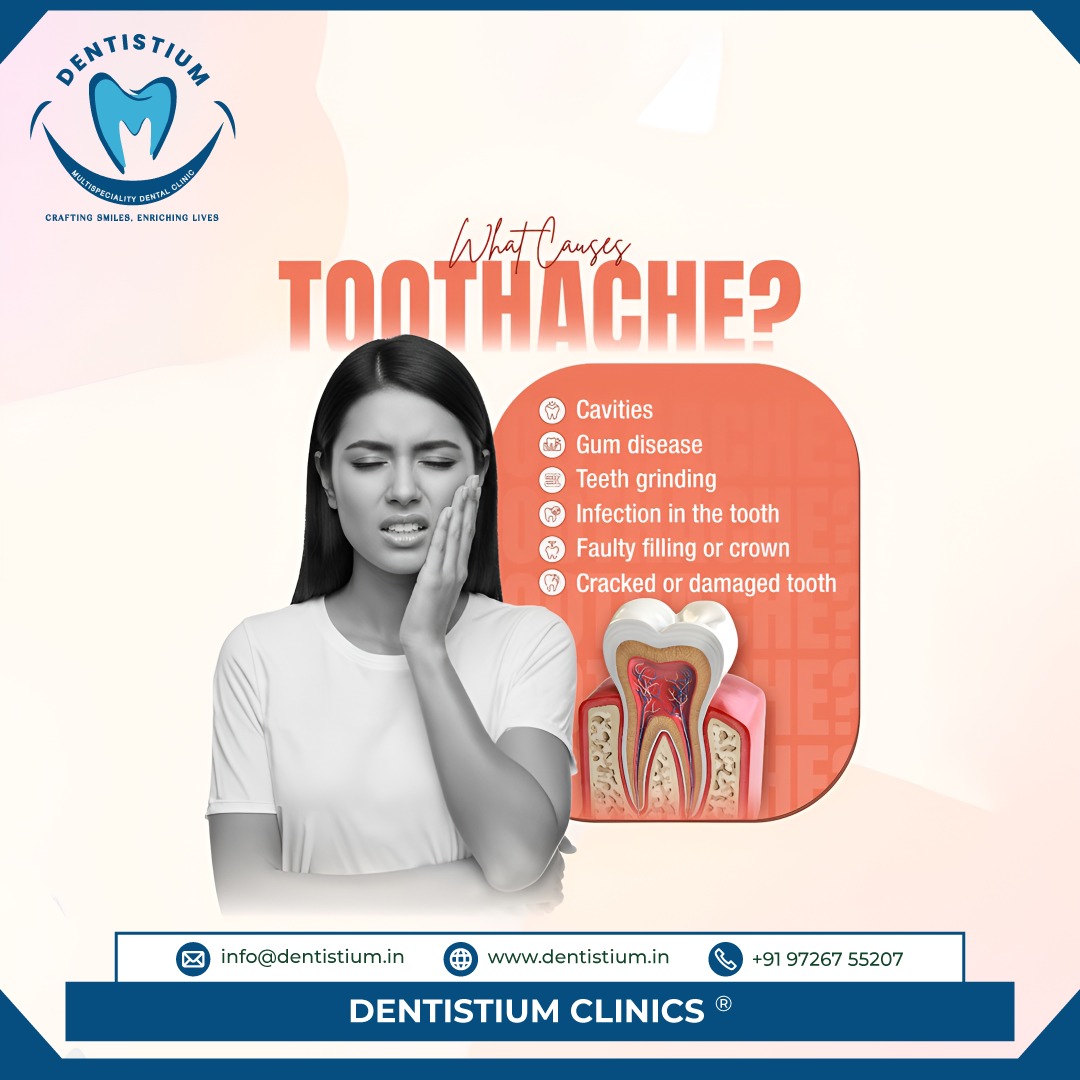
What Causes Toothache? Know the Warning Signs
Toothache is not just pain — it’s your body’s warning sign. Ignoring it can lead to serious dental problems and costly treatments later.
Common causes like cavities, gum disease, infection, or even teeth grinding can silently damage your oral health. Early diagnosis and timely treatment can save your tooth and prevent complications.
If you are experiencing sensitivity, sharp pain, or swelling, don’t delay your dental visit. Get expert care and keep your smile healthy with Dentistium Clinics.
📞 Book your appointment today and stay pain-free!
🦷 What Causes Toothache? Common Reasons & When to See a Dentist
Toothache is one of the most common dental problems people experience, ranging from mild discomfort to severe pain. While many tend to ignore it initially, tooth pain is often a sign of an underlying issue that requires professional attention.
🔍 Common Causes of Toothache
1. Cavities (Tooth Decay)
Tooth decay occurs when bacteria damage the enamel, creating holes in the tooth. This is one of the leading causes of toothache.
2. Gum Disease
Inflamed or infected gums can cause pain, bleeding, and sensitivity, eventually affecting the tooth’s support structure.
3. Teeth Grinding (Bruxism)
Grinding or clenching your teeth can wear down enamel and lead to jaw pain and tooth sensitivity.
4. Tooth Infection
An infection inside the tooth (abscess) can cause severe pain, swelling, and even fever if left untreated.
5. Faulty Filling or Crown
Old or damaged dental restorations can expose sensitive parts of the tooth, leading to discomfort.
6. Cracked or Damaged Tooth
A cracked tooth may not always be visible but can cause sharp pain while chewing.
⚠️ When Should You Visit a Dentist?
Do not ignore tooth pain if you experience:
- Persistent or severe pain
- Swelling in gums or face
- Sensitivity to hot or cold
- Bad taste or odor in the mouth
💡 Tips to Prevent Toothache
- Brush twice daily with fluoride toothpaste
- Floss regularly
- Avoid excessive sugary foods
- Visit your dentist every 6 months
🏥 Expert Care at Dentistium Clinics
At Dentistium Clinics, we provide advanced diagnosis and personalized treatment to address the root cause of your toothache. From preventive care to advanced dental procedures, your smile is in safe hands.
👉 Don’t wait for the pain to get worse.
Book your consultation today and protect your smile!