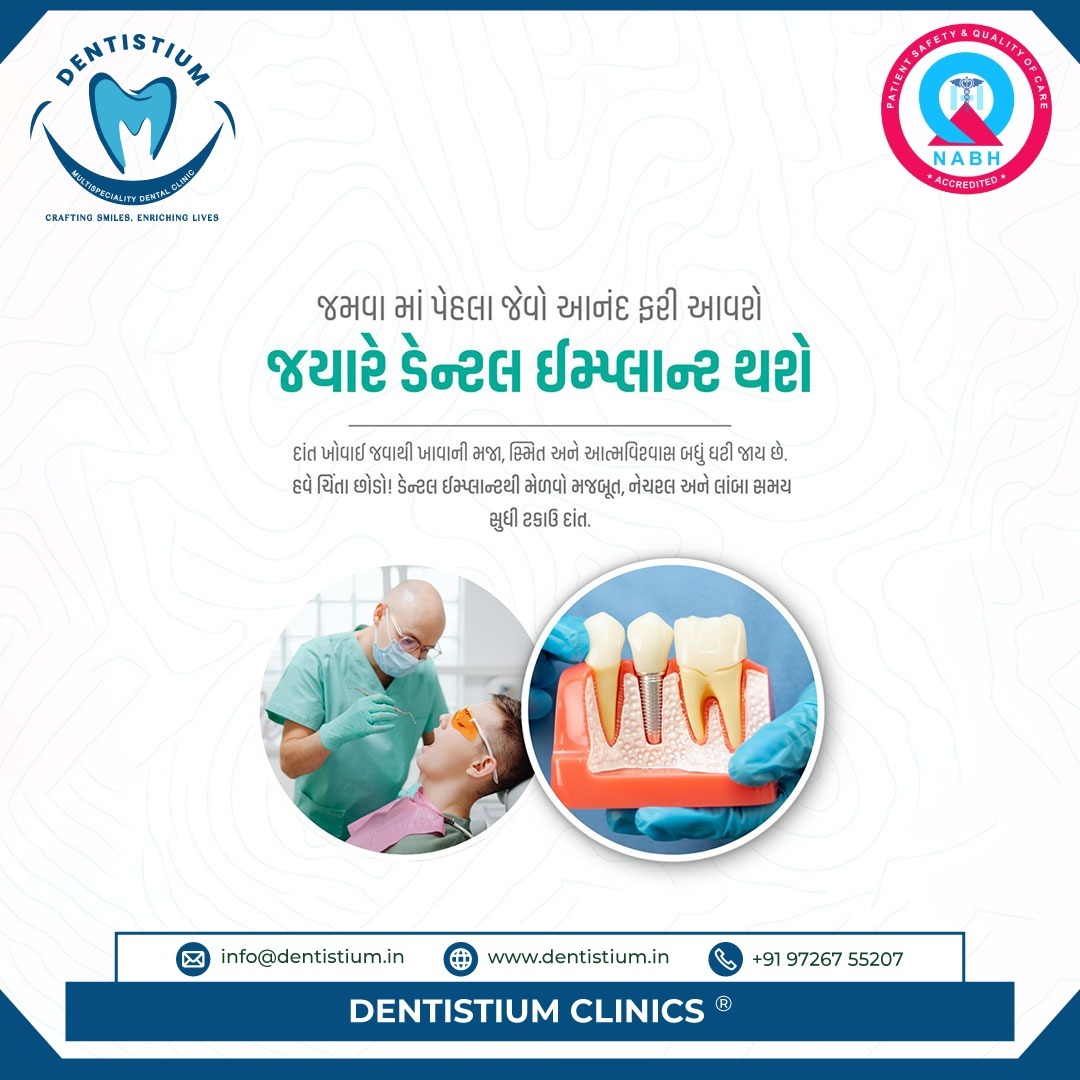
Restore Your Smile with Dental Implants 🦷
Dental Implants: The Permanent Solution for Missing Teeth
A missing tooth is more than just a cosmetic concern—it can affect your confidence, speech, chewing ability, and overall oral health. Fortunately, modern dentistry offers a long-lasting and reliable solution: Dental Implants.
What Are Dental Implants?
Dental implants are artificial tooth roots made of biocompatible titanium that are surgically placed into the jawbone. Once the implant fuses with the bone, a custom-made crown is attached, creating a tooth that looks, feels, and functions like a natural one.
Why Should Missing Teeth Be Replaced?
Ignoring a missing tooth can lead to several oral health problems, including:
- Difficulty chewing food properly.
- Changes in speech and pronunciation.
- Shifting of adjacent teeth.
- Jawbone deterioration due to bone loss.
- Changes in facial appearance over time.
- Reduced confidence while smiling or speaking.
Replacing missing teeth with dental implants helps prevent these complications and restores your oral health.
Benefits of Dental Implants
1. Natural Appearance
Dental implants are designed to blend seamlessly with your natural teeth, giving you a confident and beautiful smile.
2. Long-Lasting Solution
With proper care and regular dental check-ups, implants can last for decades, making them one of the most durable tooth replacement options.
3. Improved Chewing Ability
Unlike removable dentures, implants provide excellent stability, allowing you to enjoy your favorite foods comfortably.
4. Better Speech
Missing teeth or loose dentures can affect speech. Dental implants help you speak naturally without discomfort.
5. Prevents Bone Loss
Dental implants stimulate the jawbone, helping maintain bone density and preserving your facial structure.
6. Easy Maintenance
Implants require the same care as natural teeth—daily brushing, flossing, and regular dental visits.
Who Is a Good Candidate?
You may be a suitable candidate for dental implants if you:
- Have one or more missing teeth.
- Have healthy gums.
- Have sufficient jawbone to support the implant.
- Maintain good oral hygiene.
- Are looking for a permanent tooth replacement solution.
A detailed consultation and digital evaluation will help determine the best treatment plan for you.
Why Choose Dentistium Multispeciality Dental Clinic?
At Dentistium Multispeciality Dental Clinic, we are committed to providing world-class dental care with precision and compassion.
Our advantages include:
- Experienced implant specialists.
- Advanced digital diagnostics and treatment planning.
- NABH-accredited standards for patient safety and quality care.
- Modern equipment and painless treatment techniques.
- Personalized treatment plans for every patient.
Restore Your Smile Today
Don’t let missing teeth affect your confidence or quality of life. Dental implants offer a safe, strong, and natural-looking solution that can transform your smile for years to come.
Book your consultation with Dentistium Multispeciality Dental Clinic and take the first step toward a healthier, more confident smile.
📞 Call: +91 97267 55207
🌐 Website: www.dentistium.in
📧 Email: info@dentistium.in
Your smile deserves the best care. Let Dentistium help you smile with confidence! 🦷✨