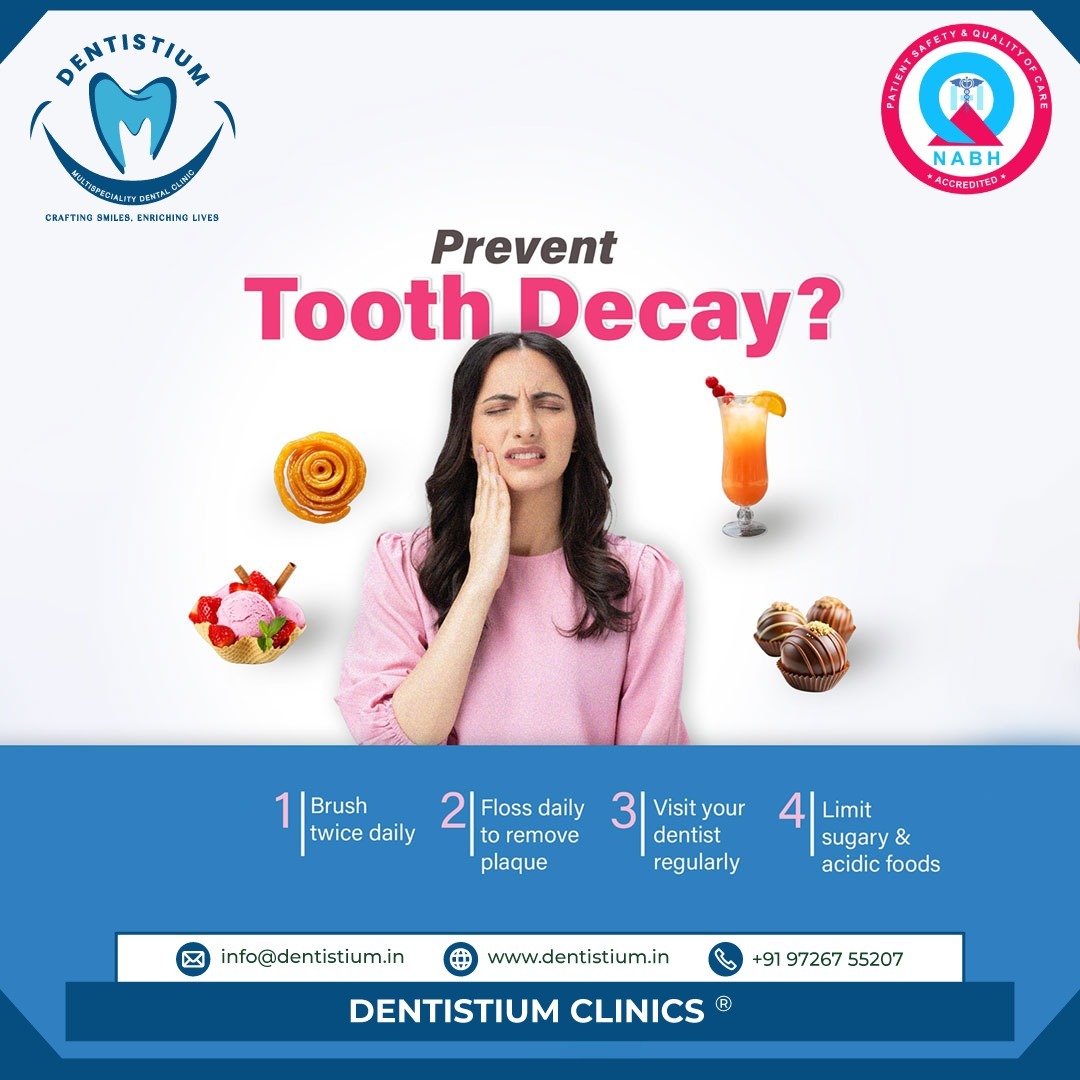
🦷 Prevent Tooth Decay Before It Starts | Simple Tips for a Healthier Smile

Prevent Tooth Decay: 4 Simple Habits for a Lifetime of Healthy Smiles

A bright, healthy smile is more than just a confidence booster—it’s a reflection of your overall health. Unfortunately, tooth decay (dental cavities) is one of the most common oral health problems affecting children and adults alike. The good news? Tooth decay is largely preventable with the right oral hygiene habits and regular dental care.

At Dentistium Multispeciality Dental Clinic, we believe that prevention is always better than treatment. By following a few simple daily practices, you can keep your teeth strong, healthy, and cavity-free.

What is Tooth Decay?

Tooth decay occurs when bacteria in the mouth feed on sugars from food and drinks, producing acids that gradually damage the tooth’s protective enamel. If left untreated, decay can progress deeper into the tooth, causing pain, infection, and even tooth loss.

Common Signs of Tooth Decay

  • Tooth sensitivity to hot, cold, or sweet foods
  • Persistent toothache
  • Visible holes or pits in the teeth
  • Brown, black, or white spots on the tooth surface
  • Pain while chewing
  • Bad breath caused by bacterial buildup

Early diagnosis can prevent minor cavities from becoming major dental problems.

4 Simple Ways to Prevent Tooth Decay

1. Brush Twice Daily

Brush your teeth for at least two minutes, twice a day, using fluoride toothpaste. Brushing removes plaque, food particles, and harmful bacteria that cause cavities.

Tip: Replace your toothbrush every 3–4 months or sooner if the bristles become worn.

2. Floss Every Day

Your toothbrush cannot reach the tight spaces between your teeth. Daily flossing removes plaque and food debris from these areas, reducing the risk of cavities and gum disease.

3. Visit Your Dentist Regularly

Routine dental check-ups and professional cleanings help detect dental problems before they become serious. Your dentist can identify early signs of tooth decay and provide preventive treatments such as fluoride applications or dental sealants when needed.

Experts recommend visiting your dentist every six months or as advised.

4. Limit Sugary and Acidic Foods

Frequent consumption of sugary snacks, soft drinks, candies, and acidic beverages increases the risk of enamel erosion and cavities.

Choose healthier alternatives like:

  • Fresh fruits
  • Vegetables
  • Dairy products
  • Nuts
  • Plenty of water

Drinking water after meals also helps wash away food particles and neutralize acids.

Additional Tips for Healthy Teeth

  • Use a fluoride mouthwash if recommended by your dentist.
  • Avoid frequent snacking between meals.
  • Drink plenty of water throughout the day.
  • Encourage children to develop healthy oral hygiene habits from an early age.
  • Avoid tobacco products, which can increase the risk of oral diseases.

Why Prevention Matters

Preventive dental care not only keeps your smile healthy but also saves you from expensive and complex dental treatments in the future. Small daily habits can make a significant difference in maintaining strong teeth and healthy gums for life.

Trust Your Smile to Dentistium Multispeciality Dental Clinic

At Dentistium Multispeciality Dental Clinic, our experienced dental professionals are committed to providing comprehensive preventive, restorative, and cosmetic dental care in a safe, patient-friendly environment. As a NABH-accredited dental clinic, we focus on delivering quality care with advanced technology and personalized treatment plans.

Whether you need a routine dental check-up, professional cleaning, cavity treatment, or complete smile care, we’re here to help you achieve optimal oral health.

Schedule Your Dental Check-up Today!

Dentistium Multispeciality Dental Clinic
📍 Ahmedabad, Gujarat
🌐 www.dentistium.in
📧 info@dentistium.in
📞 +91 97267 55207

A healthy smile starts with prevention. Brush, floss, eat wisely, and visit your dentist regularly to keep tooth decay away! 🦷✨
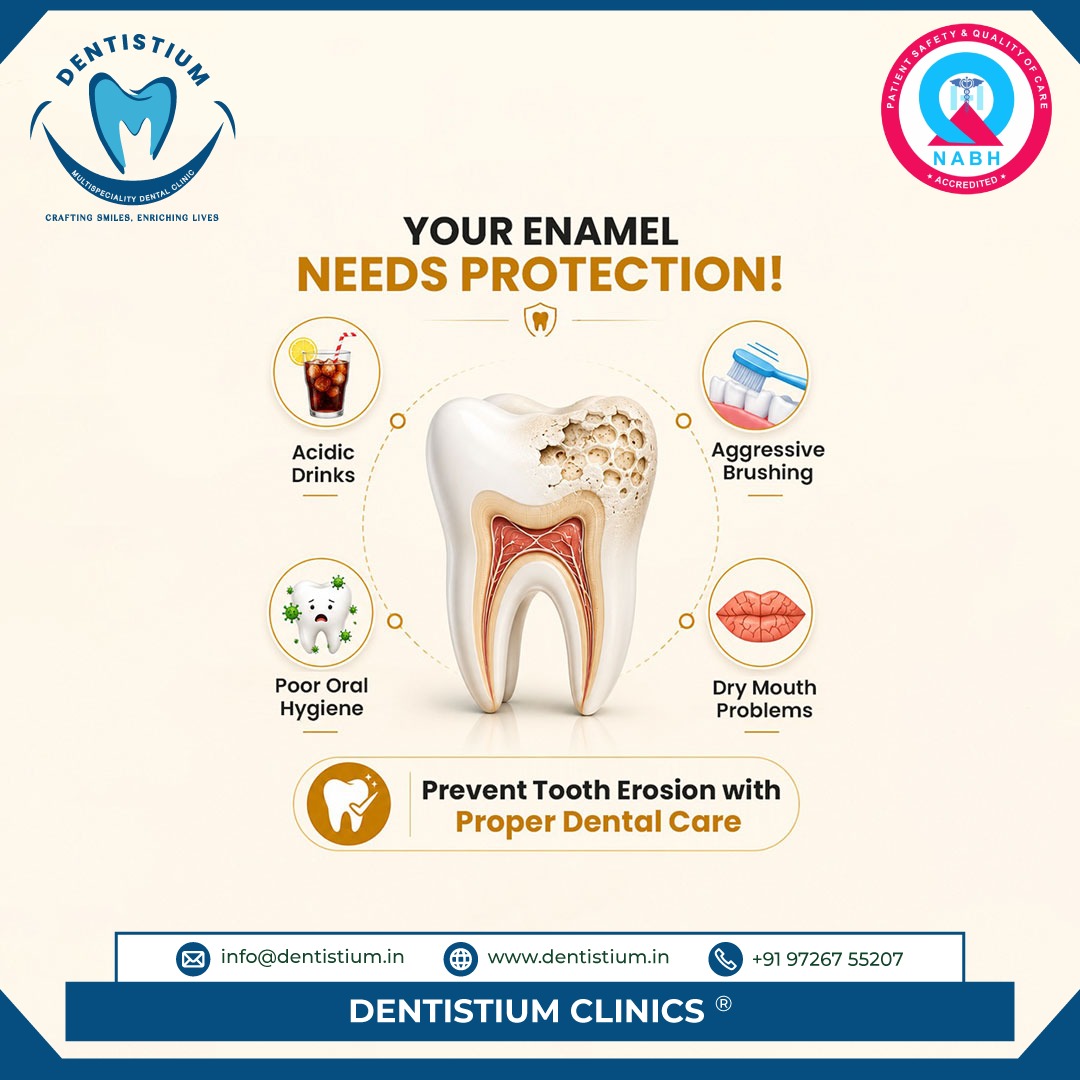


Your Enamel Needs Protection: Simple Steps for a Stronger, Healthier Smile 🦷

Your Enamel Needs Protection: How to Prevent Tooth Erosion and Keep Your Smile Healthy

A healthy smile begins with strong, healthy enamel. Tooth enamel is the hard outer layer of your teeth that protects them from daily wear and tear, bacteria, and temperature changes. Although enamel is the hardest substance in the human body, it is not indestructible. Once it wears away, it cannot regenerate naturally.

Understanding what causes enamel erosion and how to prevent it can help you maintain a healthy, confident smile for years to come.

What Is Tooth Enamel?

Enamel is the protective outer covering of your teeth. It shields the softer inner layers from decay, sensitivity, and damage caused by chewing, biting, and exposure to hot or cold foods. Because enamel cannot repair itself, prevention is the key to preserving your oral health.

Common Causes of Enamel Erosion

1. Acidic Drinks and Foods

Frequent consumption of soft drinks, energy drinks, citrus fruits, and fruit juices exposes your teeth to acids that gradually dissolve enamel. Even sugar-free acidic beverages can contribute to erosion.

Tip: Drink acidic beverages in moderation, use a straw when possible, and rinse your mouth with water afterward.

2. Aggressive Brushing

Brushing too hard or using a hard-bristled toothbrush can wear away enamel over time and damage your gums.

Tip: Use a soft-bristled toothbrush and brush gently using circular motions for two minutes, twice a day.

3. Poor Oral Hygiene

Inadequate brushing and flossing allow plaque and bacteria to build up, producing acids that weaken enamel and increase the risk of cavities.

Tip: Brush twice daily with fluoride toothpaste, floss every day, and visit your dentist regularly for professional cleanings.

4. Dry Mouth

Saliva plays a crucial role in neutralizing acids and protecting enamel. A lack of saliva due to dehydration, medications, or certain medical conditions increases the risk of enamel erosion.

Tip: Stay hydrated, chew sugar-free gum to stimulate saliva production, and consult your dentist if dry mouth persists.

Signs of Enamel Erosion

Be aware of these early warning signs:

  • Increased tooth sensitivity
  • Yellowing teeth due to exposed dentin
  • Rounded or rough tooth edges
  • Small cracks or chips
  • Pain when consuming hot, cold, or sweet foods
  • Increased risk of cavities

If you notice any of these symptoms, seek dental care promptly to prevent further damage.

How to Protect Your Enamel

Maintaining healthy enamel is easier than repairing damaged teeth. Follow these simple habits:

  • Brush gently with fluoride toothpaste.
  • Floss daily to remove plaque between teeth.
  • Limit sugary and acidic foods and drinks.
  • Drink plenty of water throughout the day.
  • Wait at least 30 minutes to brush after consuming acidic foods or beverages.
  • Visit your dentist every six months for preventive checkups and cleanings.

Why Regular Dental Visits Matter

Routine dental examinations help detect enamel erosion before it becomes severe. Professional fluoride treatments, personalized oral care advice, and early intervention can prevent costly and complex dental procedures in the future.

Protect Your Smile with Dentistium Clinics

At Dentistium Clinics, we believe prevention is the foundation of lifelong oral health. Our experienced dental professionals provide comprehensive checkups, preventive treatments, and personalized care to help you maintain strong enamel and a beautiful smile.

Whether you’re experiencing tooth sensitivity or simply want to keep your teeth healthy, we’re here to help every step of the way.

Final Thoughts

Your enamel protects your smile every day, so it’s important to protect it in return. By making small changes to your daily habits and scheduling regular dental visits, you can prevent enamel erosion and enjoy healthier, stronger teeth for years to come.

Book your appointment with Dentistium Clinics today and give your smile the care it deserves. 🦷✨

Healthy Gums, Healthy Smile – Know the Signs Before It’s Too Late! 🦷✨

Your gums are the foundation of a healthy smile. Ignoring early signs of gum disease can lead to serious dental problems, including tooth loss. If you’re experiencing persistent bad breath, bleeding gums, pain while chewing, or loose and sensitive teeth, it’s time to seek professional care.

At Dentistium Multispeciality Dental Clinic, our experienced dental team provides advanced gum treatments using modern technology to restore your oral health and protect your smile. Early diagnosis and timely treatment can help prevent complications and keep your teeth strong for years to come.

📞 Book your consultation today and take the first step towards healthier gums and a confident smile!

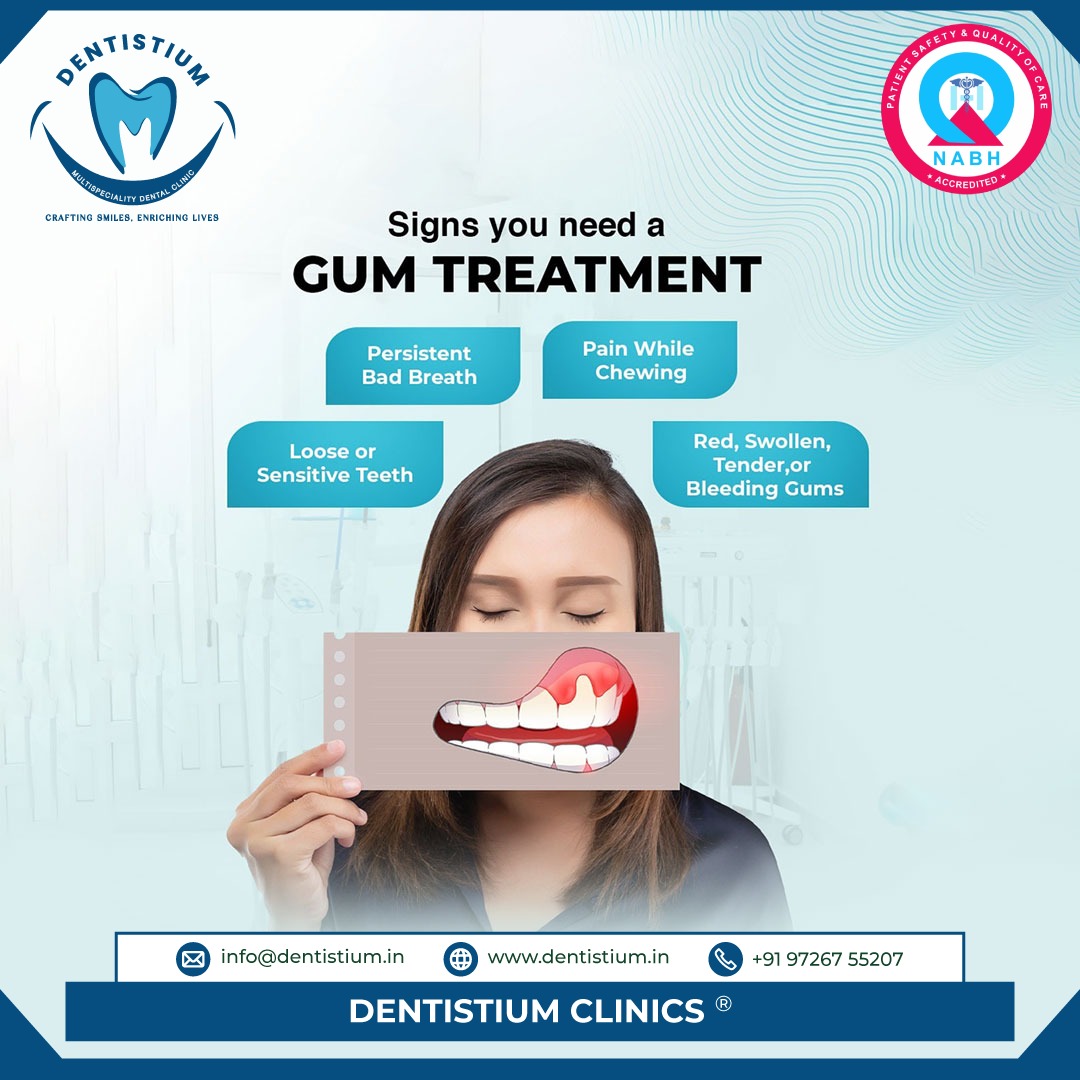
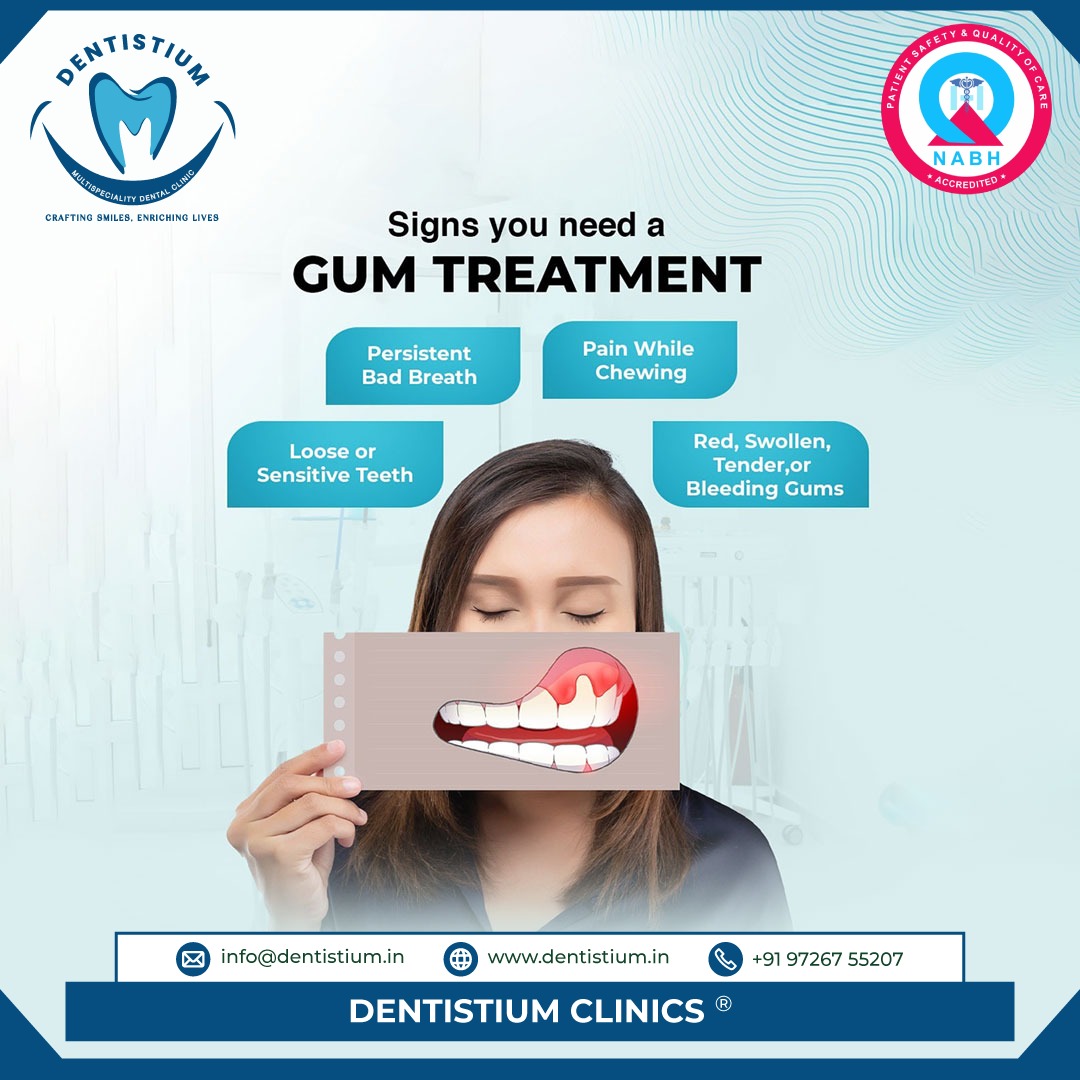
Signs You Need Gum Treatment: Don’t Ignore These Warning Signals

Your gums play a crucial role in maintaining a healthy smile. While many people focus on their teeth, healthy gums are equally important for strong oral health. Gum disease often develops silently, and if left untreated, it can lead to serious complications such as tooth loss, bone damage, and persistent oral infections.

Recognizing the early signs of gum problems can help you seek treatment before the condition becomes severe.

Common Signs You May Need Gum Treatment

1. Persistent Bad Breath

If you experience bad breath that doesn’t improve despite brushing and using mouthwash, it may be caused by bacteria trapped beneath the gum line. This is often an early sign of gum infection.

2. Red, Swollen, or Bleeding Gums

Healthy gums should appear firm and pink. If your gums bleed while brushing or flossing, or if they appear red and swollen, it could indicate gingivitis—the earliest stage of gum disease.

3. Pain While Chewing

Discomfort or pain during chewing can occur when gum tissues become inflamed or infected. Ignoring this symptom may allow the condition to worsen over time.

4. Loose or Sensitive Teeth

As gum disease progresses, it can damage the supporting structures around your teeth. This may lead to increased tooth sensitivity, shifting teeth, or even tooth mobility.

Why Early Treatment Matters

Gum disease doesn’t just affect your mouth—it can also impact your overall health. Research has linked advanced gum disease to conditions such as diabetes, heart disease, and other systemic health concerns. Early diagnosis and treatment can prevent extensive dental procedures in the future.

How Gum Treatment Can Help

Professional gum treatment may include:

  • Deep cleaning (Scaling and Root Planing)
  • Laser Gum Therapy
  • Periodontal Maintenance
  • Gum Infection Management
  • Oral Hygiene Education and Preventive Care

These treatments help remove harmful bacteria, reduce inflammation, and restore gum health.

Tips for Maintaining Healthy Gums

✔ Brush twice daily with a soft-bristled toothbrush
✔ Floss every day to remove plaque between teeth
✔ Use an antibacterial mouthwash
✔ Avoid tobacco products
✔ Schedule regular dental check-ups and cleanings

Conclusion

Healthy gums are the foundation of a beautiful and confident smile. If you notice symptoms such as bleeding gums, persistent bad breath, pain while chewing, or loose teeth, don’t delay seeking professional dental care. Early intervention can save your teeth, protect your oral health, and prevent more serious complications.

Visit Dentistium Multispeciality Dental Clinic

Our experienced dental team is committed to providing advanced gum care and personalized treatment solutions to help you maintain a healthy, confident smile.

📞 Call: +91 97267 55207
🌐 Website: www.dentistium.in
📧 Email: info@dentistium.in

Healthy Gums = Healthy Smile! 🦷


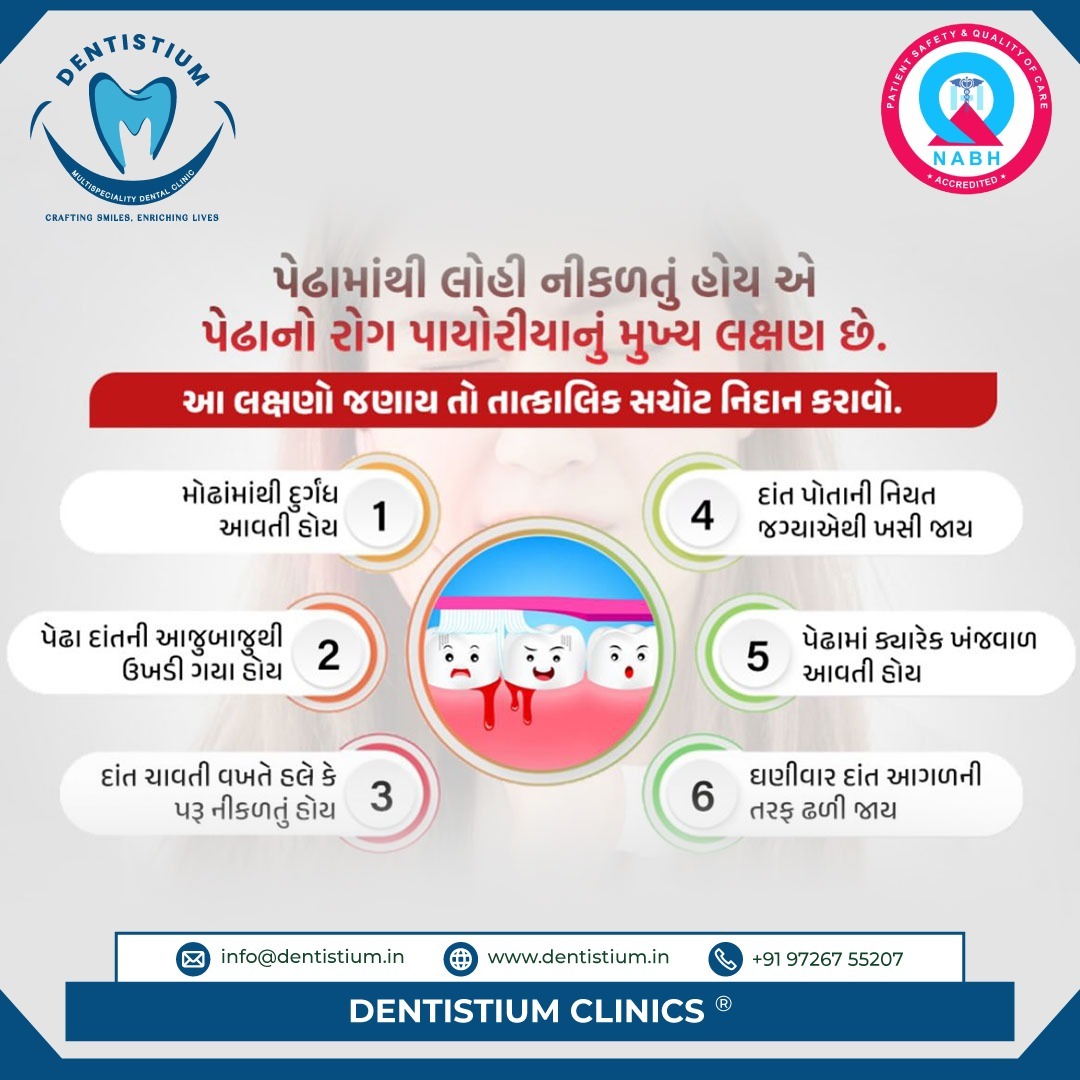
પેઢામાંથી લોહી આવવું: પાયોરિયાનું મુખ્ય લક્ષણ – સમયસર સારવાર જરૂરી!

પાયોરિયા શું છે?

પાયોરિયા એટલે પેઢાનો ગંભીર ચેપ, જે દાંતની આસપાસના પેઢા અને હાડકાંને નુકસાન પહોંચાડે છે. શરૂઆતમાં આ રોગના લક્ષણો સામાન્ય લાગે છે, પરંતુ અવગણવામાં આવે તો દાંત હલવા લાગે છે અને અંતે દાંત ગુમાવવાનો વારો આવી શકે છે.

પાયોરિયાના મુખ્ય લક્ષણો:

✔ મોઢામાંથી દુર્ગંધ આવવી
✔ પેઢા દાંતની આજુબાજુથી ઉપડી જવા
✔ દાંત ચાવતી વખતે હલે અથવા નીકળતું હોય તેવી લાગણી
✔ દાંત પોતાની નિયત જગ્યાથી ખસી જવા
✔ પેઢામાં વારંવાર ખંજવાળ આવવી
✔ પેઢામાંથી લોહી આવવું

પાયોરિયાના કારણો:

  • દાંત પર પ્લેક અને ટાર્ટર જમા થવું
  • મોઢાની યોગ્ય સફાઈ ન રાખવી
  • ધુમ્રપાન અથવા તમાકુનું સેવન
  • ડાયાબિટીસ જેવી કેટલીક તબીબી પરિસ્થિતિઓ
  • નિયમિત ડેન્ટલ ચેકઅપ ન કરાવવું

સારવાર અને બચાવ:

નિયમિત બ્રશિંગ, ફ્લોસિંગ અને દર 6 મહિનાએ ડેન્ટલ ચેકઅપ કરાવવાથી પાયોરિયાથી બચી શકાય છે. જરૂર પડે ત્યારે સ્કેલિંગ અને ડીપ ક્લીનિંગ જેવી સારવારથી પેઢાનું સ્વાસ્થ્ય સુધારી શકાય છે.

સ્વસ્થ પેઢા અને મજબૂત દાંત માટે આજે જ તમારા ડેન્ટિસ્ટનો સંપર્ક કરો.

ઠંડી વસ્તુ ખાતા કે પીતા દાંતમાં ઝણઝણાટી થાય છે? હવે ચિંતા છોડો! 🦷✨

શું તમને ઠંડી વસ્તુઓ ખાતા કે પીતા દાંતમાં ઝણઝણાટી થાય છે?

ઘણા લોકો આઇસ્ક્રીમ, ઠંડું પાણી, કોલ્ડ ડ્રિંક્સ અથવા મીઠી વસ્તુઓ ખાતા-પીતા સમયે દાંતમાં અચાનક ઝણઝણાટી કે તીવ્ર દુખાવાનો અનુભવ કરે છે. આ સમસ્યાને દાંતની સંવેદનશીલતા (Tooth Sensitivity) કહેવામાં આવે છે. શરૂઆતમાં સામાન્ય લાગતી આ સમસ્યા સમય જતાં વધુ ગંભીર બની શકે છે અને દૈનિક જીવનને અસર કરી શકે છે.

દાંતમાં સંવેદનશીલતા કેમ થાય છે?

દાંતની બહારની સુરક્ષાત્મક પરત (Enamel) ઘસાઈ જવાથી અથવા પેઢાં પાછળ ખસી જવાથી દાંતનો અંદરનો ભાગ (Dentin) ખુલ્લો પડી જાય છે. પરિણામે ઠંડી, ગરમ, મીઠી અથવા ખાટી વસ્તુઓના સંપર્કમાં આવતા દાંતમાં દુખાવો અથવા ઝણઝણાટી થાય છે.

મુખ્ય કારણો

  • ખૂબ જ જોરથી બ્રશ કરવું

  • દાંતમાં કીડ (Cavity)

  • પેઢાંની બીમારીઓ

  • દાંત ઘસવાની આદત (Teeth Grinding)

  • તૂટેલા અથવા ફાટેલા દાંત

  • એસિડિક ખોરાક અને પીણાંનું વધુ સેવન

  • લાંબા સમયથી દાંતની યોગ્ય સફાઈ ન કરવી

આ સમસ્યાને અવગણશો નહીં

જો તમને વારંવાર ઠંડી કે ગરમ વસ્તુઓ ખાતા-પીતા દાંતમાં દુખાવો થાય છે, તો તે કોઈ અંદરની ડેન્ટલ સમસ્યાનો સંકેત હોઈ શકે છે. સમયસર ડેન્ટલ ચેકઅપ કરાવવાથી સમસ્યાનું મૂળ કારણ જાણી યોગ્ય સારવાર મેળવી શકાય છે.

સંવેદનશીલ દાંત માટે શું કરવું?

  • Sensitivity માટે બનાવેલી ટૂથપેસ્ટનો ઉપયોગ કરો.

  • સોફ્ટ બ્રિસલવાળા બ્રશથી દાંત સાફ કરો.

  • ખૂબ ઠંડી અને એસિડિક વસ્તુઓનું સેવન મર્યાદિત કરો.

  • નિયમિત ડેન્ટલ ચેકઅપ કરાવો.

  • ડેન્ટિસ્ટની સલાહ મુજબ ફ્લોરાઈડ અથવા અન્ય પ્રોફેશનલ ટ્રીટમેન્ટ લો.

Dentistium Clinics સાથે નિર્ભય સ્મિત

Dentistium Clinics ખાતે અમે દાંતની સંવેદનશીલતાનું આધુનિક પદ્ધતિઓ દ્વારા નિદાન અને સારવાર કરીએ છીએ. અમારા નિષ્ણાત ડેન્ટિસ્ટ તમારી સમસ્યાનું મૂળ કારણ શોધી વ્યક્તિગત સારવાર પ્રદાન કરે છે જેથી તમે ફરીથી મનપસંદ ઠંડી વસ્તુઓનો આનંદ લઈ શકો.

દાંતમાં ઝણઝણાટી કે દુખાવાને સામાન્ય ન માનો. આજે જ ડેન્ટલ ચેકઅપ કરાવો અને સ્વસ્થ, મજબૂત સ્મિત તરફ એક પગલું ભરો! 🦷✨

Healthy Gums, Healthy Smile – Tips to Prevent Bleeding Gums

Tips to Prevent Bleeding Gums and Maintain Healthy Oral Hygiene

Bleeding gums are one of the most common signs that your gums may not be healthy. Many people notice slight bleeding while brushing or flossing and often ignore it, thinking it is normal. However, healthy gums should not bleed regularly. Bleeding gums can be an early warning sign of gum disease, poor oral hygiene, vitamin deficiencies, or incorrect brushing techniques.

Taking proper care of your gums is essential because healthy gums are the foundation of strong teeth and a confident smile. With a few simple habits and regular dental care, you can prevent gum problems and maintain excellent oral health.

What Causes Bleeding Gums?

There are several reasons why gums may bleed, including:

  • Poor oral hygiene leading to plaque buildup

  • Gingivitis or early gum disease

  • Brushing too hard

  • Lack of flossing

  • Vitamin C or Vitamin K deficiency

  • Smoking or tobacco use

  • Hormonal changes

  • Certain medical conditions

If bleeding continues for a long time, it is important to consult a dental professional for proper evaluation and treatment.

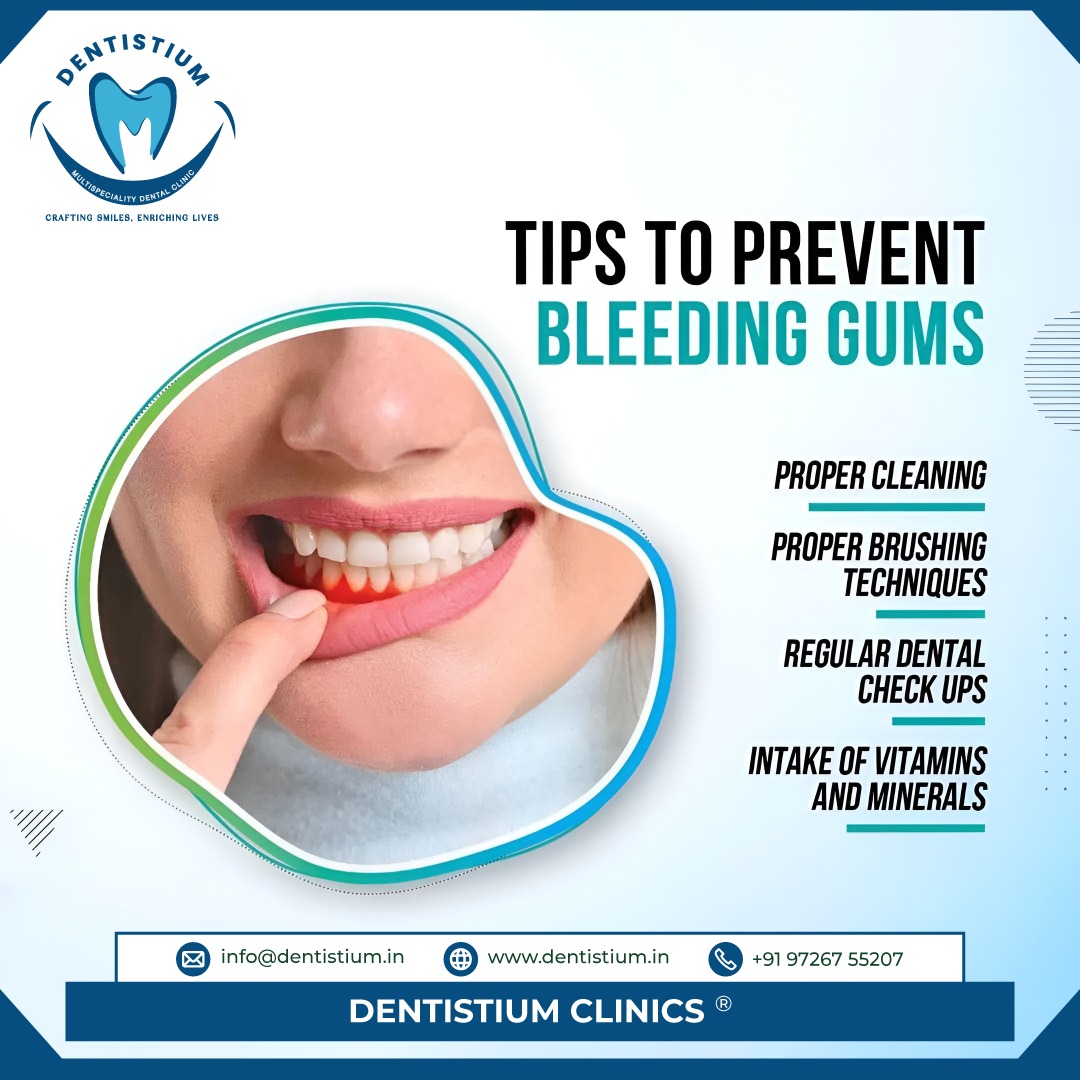
Tips to Prevent Bleeding Gums

1. Practice Proper Oral Hygiene

Brush your teeth at least twice a day using a soft-bristled toothbrush and fluoride toothpaste. Proper cleaning helps remove plaque and bacteria that cause gum irritation.

2. Use Correct Brushing Techniques

Avoid aggressive brushing, as it can damage gum tissues. Use gentle circular motions while brushing to clean your teeth effectively without harming your gums.

3. Floss Daily

Flossing removes food particles and plaque from areas where a toothbrush cannot reach. Daily flossing helps reduce gum inflammation and prevents bleeding.

4. Visit Your Dentist Regularly

Regular dental check-ups and professional cleanings help detect gum problems early and keep your gums healthy. Preventive care is the best way to avoid serious dental issues.

5. Maintain a Healthy Diet

Include foods rich in vitamins and minerals, especially Vitamin C and calcium, to strengthen gums and teeth. Drinking plenty of water also supports good oral health.

6. Avoid Tobacco Products

Smoking and tobacco use can weaken gums, increase plaque buildup, and slow down healing. Quitting tobacco significantly improves gum health.

When Should You Visit a Dentist?

You should visit a dentist if you experience:

  • Persistent bleeding gums

  • Swollen or red gums

  • Bad breath

  • Pain while chewing

  • Loose teeth

Ignoring these symptoms may lead to advanced gum disease and tooth loss.

Conclusion

Bleeding gums should never be ignored. Early prevention and proper dental care can help maintain strong gums and a healthy smile for years to come. Following good oral hygiene habits, eating a nutritious diet, and scheduling regular dental check-ups are the keys to preventing gum disease.

At DENTISTIUM CLINICS, we are committed to providing advanced and compassionate dental care to help you achieve optimal oral health.

Crafting Smiles, Enriching Lives..

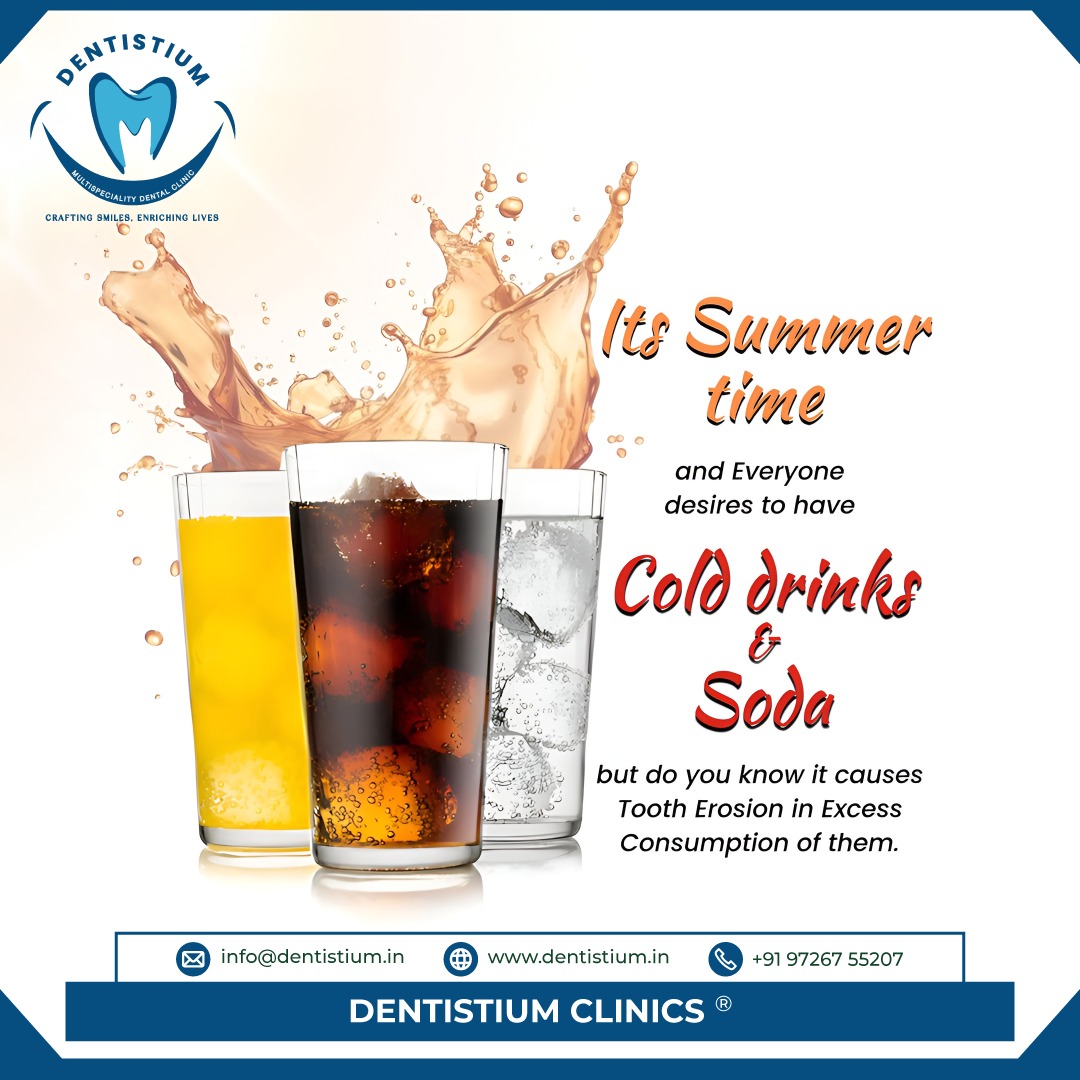
Summer Drinks vs Your Smile: The Hidden Danger of Tooth Erosion

Summer Drinks & Your Smile: Hidden Risks You Should Know

As the temperature rises, nothing feels more refreshing than a chilled glass of juice, soda, or iced beverages. Summer is the season of cool drinks, and it’s natural to crave them. But while these beverages provide instant relief from the heat, they can quietly harm your teeth if consumed excessively.

The Truth About Cold Drinks & Dental Health

Most cold drinks—especially sodas, packaged juices, and energy drinks—contain high levels of sugar and acids. These ingredients are the main culprits behind Tooth Erosion, a condition that gradually wears away the protective enamel layer of your teeth.

What is Tooth Erosion?

Tooth erosion occurs when acids dissolve the enamel, the hard outer layer of your teeth. Unlike cavities, which are caused by bacteria, erosion is directly linked to acidic exposure.

How Summer Drinks Cause Damage

  • High Acidity: Carbonated drinks and citrus juices have low pH levels that weaken enamel.

  • Excess Sugar: Sugary drinks feed harmful bacteria, increasing acid production.

  • Frequent Sipping: Continuous sipping throughout the day prolongs acid exposure.

Signs You Shouldn’t Ignore

  • Increased tooth sensitivity (especially to cold drinks)

  • Yellowing teeth (due to enamel thinning)

  • Rounded or smooth tooth edges

  • Pain while eating or drinking

Tips to Protect Your Teeth This Summer

  1. Limit Sugary & Fizzy Drinks
    Try to reduce intake of sodas and packaged juices.

  2. Use a Straw
    This minimizes direct contact with your teeth.

  3. Rinse Your Mouth
    After consuming acidic drinks, rinse with plain water.

  4. Wait Before Brushing
    Avoid brushing immediately after acidic drinks; wait at least 30 minutes.

  5. Stay Hydrated with Water
    Water is the safest and healthiest option.

  6. Regular Dental Check-ups
    Early detection can prevent serious damage.

Healthy Alternatives

  • Fresh coconut water

  • Homemade lemonade (low sugar)

  • Buttermilk (chaas)

  • Infused water with fruits and herbs

Final Thoughts

Enjoy your summer, but don’t let your love for cold drinks cost you your smile. Small habits can make a big difference in protecting your teeth from long-term damage.

If you experience sensitivity or notice changes in your teeth, consult a dental professional promptly.


If you want, I can also create:

  • Short Instagram caption + hashtags

  • Gujarati version

  • Website SEO meta description

Just tell me 👍

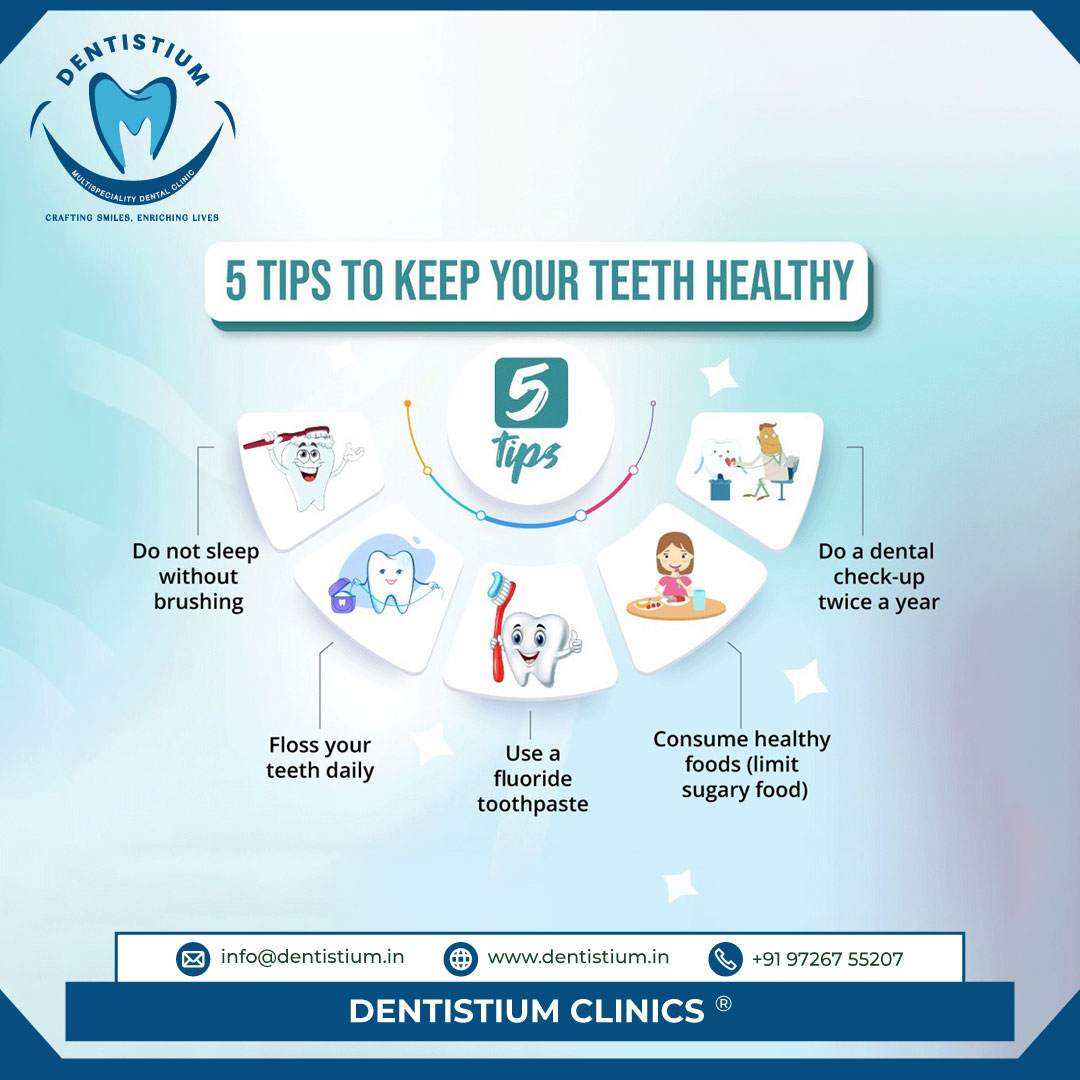
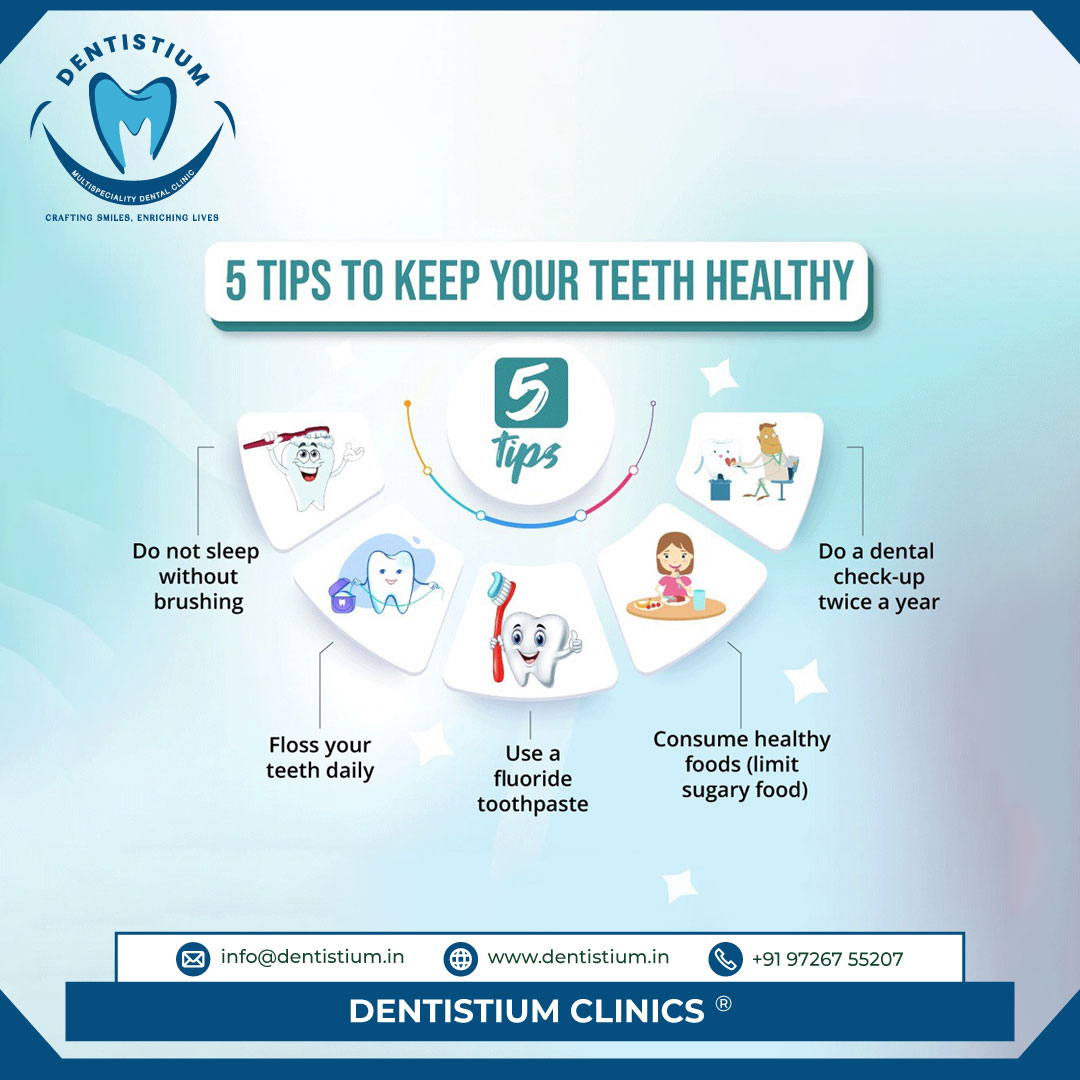
5 Simple Tips to Keep Your Teeth Healthy Every Day

A healthy smile starts with simple daily habits! Taking care of your teeth doesn’t require complicated routines—just consistency and the right practices. From brushing before bed to choosing the right toothpaste and maintaining a balanced diet, small steps can make a big difference in your oral health.

Regular dental check-ups help detect problems early, while daily flossing removes hidden plaque that brushing alone can’t reach. By following these easy tips, you can prevent cavities, gum disease, and maintain a confident, bright smile.

Start today—because your smile deserves the best care! 😁

Maintaining good oral hygiene is essential not only for a beautiful smile but also for overall health. Poor dental care can lead to cavities, gum disease, and even impact your general well-being. The good news? Keeping your teeth healthy is simple if you follow the right habits consistently.

1. Don’t Sleep Without Brushing
Brushing your teeth before bed is crucial. During the day, plaque and bacteria build up, and if not removed, they can cause tooth decay and bad breath.

2. Floss Your Teeth Daily
Flossing removes food particles and plaque from between your teeth where your toothbrush cannot reach. It helps prevent gum disease and cavities.

3. Use Fluoride Toothpaste
Fluoride strengthens tooth enamel and protects against cavities. Always choose a toothpaste that contains fluoride for better protection.

4. Eat Healthy & Limit Sugary Foods
Sugary foods and drinks are the main cause of tooth decay. Opt for a balanced diet with fruits, vegetables, and calcium-rich foods to keep your teeth strong.

5. Visit Your Dentist Regularly
Routine dental check-ups (at least twice a year) help detect problems early and keep your oral health in top condition.

Conclusion:
Healthy teeth are a result of daily care and smart choices. Follow these simple tips, and you’ll enjoy a bright, confident smile for years to come.

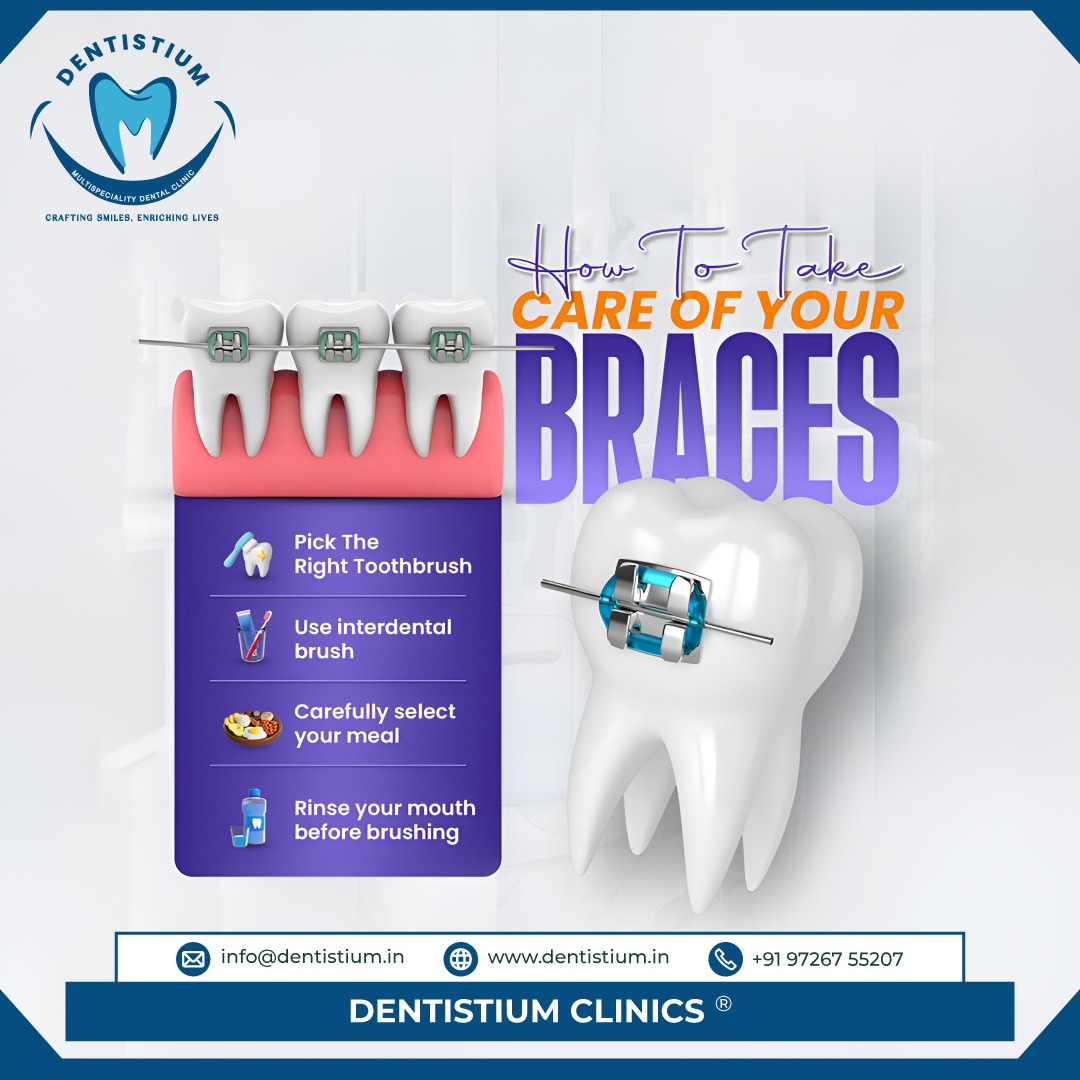
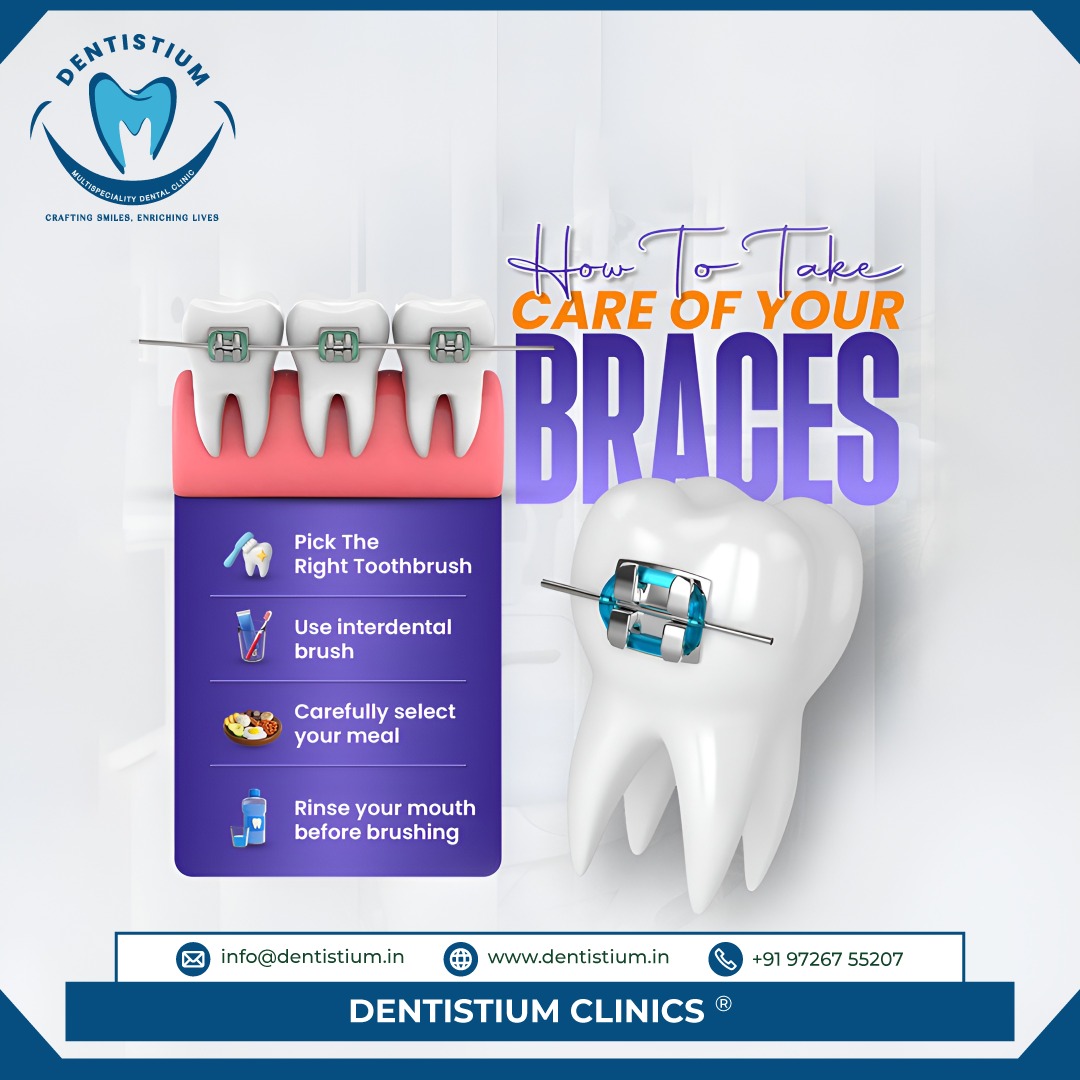
How to Take Care of Your Braces for a Healthy Smile

Braces are a big step towards achieving a perfectly aligned and confident smile—but proper care is essential to get the best results. Maintaining good oral hygiene while wearing braces can prevent plaque buildup, tooth decay, and gum problems.

Start by choosing the right toothbrush—preferably a soft-bristled or orthodontic brush designed to clean around brackets and wires. Using an interdental brush helps remove food particles stuck between braces where regular brushing cannot reach.

Your diet also plays a crucial role. Avoid sticky, hard, or sugary foods that can damage brackets or cause cavities. Always rinse your mouth before brushing to loosen trapped debris, making cleaning more effective.

With consistent care and the right habits, your braces journey can be smooth, comfortable, and successful—leading you to a beautiful, confident smile!

Complete Guide to Braces Care: Keep Your Smile on Track

Braces are one of the most effective orthodontic treatments to correct misaligned teeth and improve oral health. However, they require extra care and attention compared to regular dental hygiene routines.

1. Choose the Right Toothbrush
Use a soft-bristled toothbrush or an orthodontic toothbrush that can clean around brackets and wires effectively. Electric toothbrushes can also be helpful for thorough cleaning.

2. Use Interdental Brushes
These small brushes are specially designed to clean between brackets and wires. They help remove food particles and plaque from hard-to-reach areas.

3. Be Careful with Your Diet
Avoid foods like chewing gum, caramel, popcorn, and hard candies. These can damage your braces or get stuck, increasing the risk of cavities.

4. Rinse Before Brushing
Rinse your mouth with water or mouthwash before brushing to loosen food debris. This makes brushing more effective and reduces plaque buildup.

5. Maintain Regular Dental Visits
Routine check-ups ensure your braces are working properly and your oral health stays on track.

Taking care of your braces not only protects your teeth but also ensures faster and better results from your treatment.

Select your currency
INR Indian rupee
Add to cart