Restore Your Smile with Dental Implants 🦷

Dental Implants: The Permanent Solution for Missing Teeth

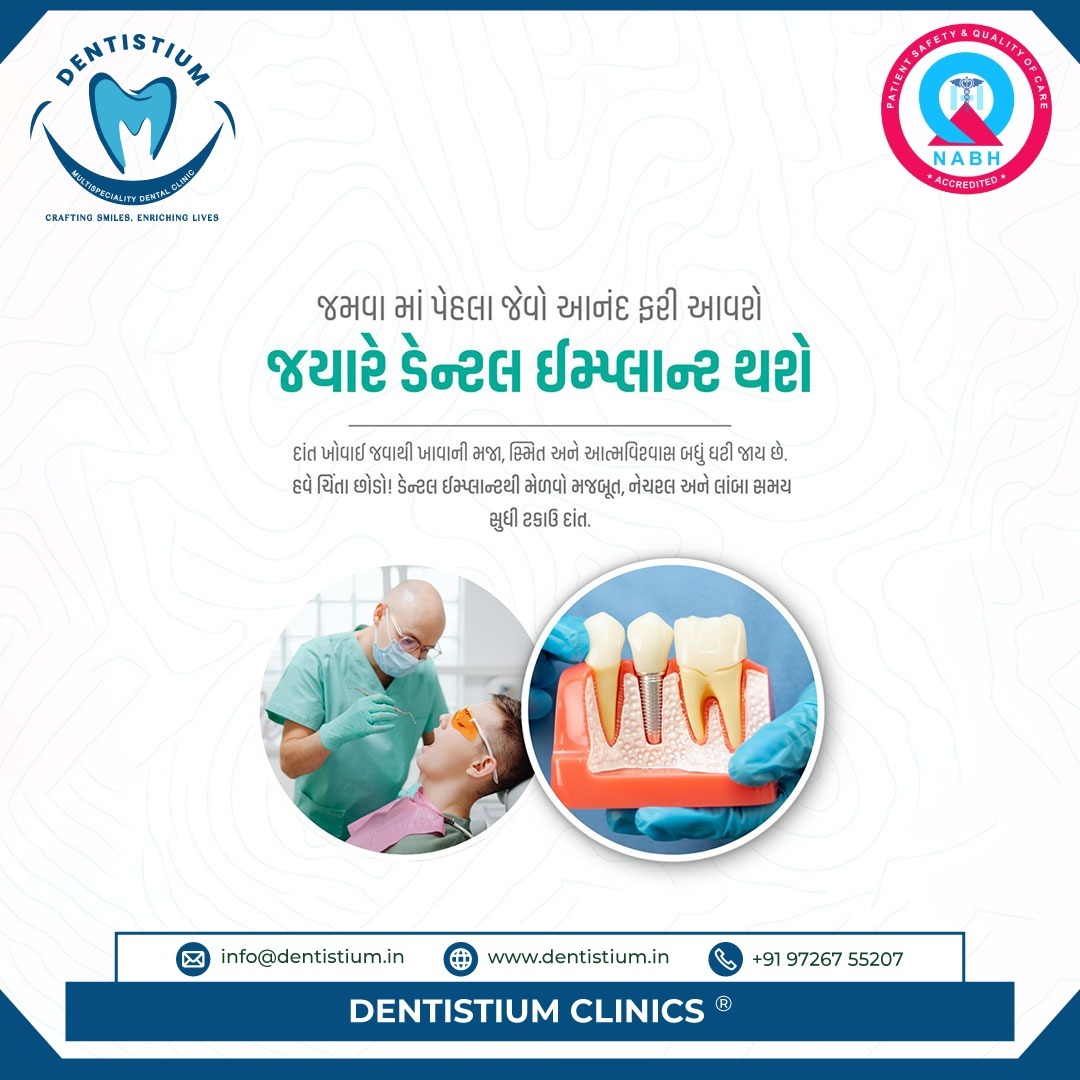
A missing tooth is more than just a cosmetic concern—it can affect your confidence, speech, chewing ability, and overall oral health. Fortunately, modern dentistry offers a long-lasting and reliable solution: Dental Implants.

What Are Dental Implants?

Dental implants are artificial tooth roots made of biocompatible titanium that are surgically placed into the jawbone. Once the implant fuses with the bone, a custom-made crown is attached, creating a tooth that looks, feels, and functions like a natural one.

Why Should Missing Teeth Be Replaced?

Ignoring a missing tooth can lead to several oral health problems, including:

  • Difficulty chewing food properly.
  • Changes in speech and pronunciation.
  • Shifting of adjacent teeth.
  • Jawbone deterioration due to bone loss.
  • Changes in facial appearance over time.
  • Reduced confidence while smiling or speaking.

Replacing missing teeth with dental implants helps prevent these complications and restores your oral health.

Benefits of Dental Implants

1. Natural Appearance

Dental implants are designed to blend seamlessly with your natural teeth, giving you a confident and beautiful smile.

2. Long-Lasting Solution

With proper care and regular dental check-ups, implants can last for decades, making them one of the most durable tooth replacement options.

3. Improved Chewing Ability

Unlike removable dentures, implants provide excellent stability, allowing you to enjoy your favorite foods comfortably.

4. Better Speech

Missing teeth or loose dentures can affect speech. Dental implants help you speak naturally without discomfort.

5. Prevents Bone Loss

Dental implants stimulate the jawbone, helping maintain bone density and preserving your facial structure.

6. Easy Maintenance

Implants require the same care as natural teeth—daily brushing, flossing, and regular dental visits.

Who Is a Good Candidate?

You may be a suitable candidate for dental implants if you:

  • Have one or more missing teeth.
  • Have healthy gums.
  • Have sufficient jawbone to support the implant.
  • Maintain good oral hygiene.
  • Are looking for a permanent tooth replacement solution.

A detailed consultation and digital evaluation will help determine the best treatment plan for you.

Why Choose Dentistium Multispeciality Dental Clinic?

At Dentistium Multispeciality Dental Clinic, we are committed to providing world-class dental care with precision and compassion.

Our advantages include:

  • Experienced implant specialists.
  • Advanced digital diagnostics and treatment planning.
  • NABH-accredited standards for patient safety and quality care.
  • Modern equipment and painless treatment techniques.
  • Personalized treatment plans for every patient.

Restore Your Smile Today

Don’t let missing teeth affect your confidence or quality of life. Dental implants offer a safe, strong, and natural-looking solution that can transform your smile for years to come.

Book your consultation with Dentistium Multispeciality Dental Clinic and take the first step toward a healthier, more confident smile.

📞 Call: +91 97267 55207
🌐 Website: www.dentistium.in
📧 Email: info@dentistium.in

Your smile deserves the best care. Let Dentistium help you smile with confidence! 🦷✨

Dental Implants: Procedure, Purpose & Benefits

Dental Implants: Procedure, Purpose & Benefits

Dental Radiology and Imaging

When it comes to restoring a confident smile and maintaining oral health, dental implants are considered one of the most effective and long-lasting solutions available. Whether you’re missing one tooth or several, dental implants can significantly improve your quality of life. In this blog, we’ll walk you through what dental implants are, how the procedure works, and the many benefits they offer.

What are dental implants?

Dental implants are titanium or ceramic posts inserted into your jawbone to hold artificial teeth. They act like the roots of your natural teeth to provide a strong foundation for fixed (permanent) or removable replacement teeth that are made to match your natural teeth. These biocompatible devices restore function and aesthetics, improving overall oral health and confidence.

Dental Implant vs Dental Bridges

Dental implants offer several advantages over traditional dental bridges. Unlike bridges, which rely on adjacent teeth for support and may require altering healthy teeth, implants are inserted directly into the jawbone, preserving surrounding teeth. Additionally, implants tend to last longer and look more natural, while also reducing the risk of decay in neighboring teeth. While bridges may seem more economical initially, implants can prove to be a cost-effective long-term solution.

Dental Implants vs Dentures:

When considering dental implants versus dentures, several key factors come into play. Dental implants offer a natural feel and durability, mimicking the look and function of natural teeth. They promote bone preservation and stability, firmly anchored in the jawbone for secure use. Maintenance is minimal, akin to caring for natural teeth, offering convenience and ease.

In contrast, dentures may present comfort issues, potentially causing discomfort or irritation due to movement on the gums. They often require frequent replacement every 5-8 years, leading to ongoing costs. Dentures can also contribute to bone loss over time, impacting facial structure and appearance. Maintenance involves regular removal for cleaning and adjustments, requiring additional time and effort. Furthermore, dentures provide limited chewing ability compared to implants, which may restrict food choices and overall enjoyment of meals.

Benefits of Dental Implants:

  1. Restored Chewing Power: Dental implants behave like natural teeth, restoring full chewing power. Patients can eat, brush, and floss normally.
  2. Longevity: Unlike dental bridges, which may last around 10 years, dental implants can last a lifetime. Made from biocompatible titanium, implants integrate with the jawbone, offering a durable replacement tooth.
  3. Prevention of Bone Loss: Dental implants prevent bone loss by replacing the root as well as the tooth. They stimulate natural bone growth, maintaining jawbone density and preventing deterioration caused by missing teeth.
  4. Stability of Adjacent Teeth: Dental implants keep adjacent teeth stable, preventing them from shifting into the gap and affecting bite, chewing ability, and appearance.
  5. Gum Disease Prevention: Implants help keep you free of gum disease by filling the missing tooth gap, preventing food and bacteria traps that can lead to gum disease.

Dental Implant Procedure

What to expect

Preparing for dental implant surgery involves several steps to ensure a smooth procedure. First, you’ll need a thorough medical evaluation to assess your overall health and identify any conditions that may affect healing. This evaluation may include dental exams, X-rays, and consultations with specialists such as oral surgeons or periodontists. It’s essential to provide your dentist with a list of medications and supplements you’re taking, especially if you’re on blood thinners. Depending on your health and the complexity of your case, your dentist may prescribe antibiotics before surgery to prevent infection. Additionally, discuss sedation options with your dentist and arrange for transportation home if you’ll be receiving sedation during the procedure.

During Dental Implant

During the dental implant surgery, your surgeon will administer anesthesia to numb your gums and may offer sedative medications to help you relax. They’ll then make an incision in your gums to expose the underlying bone and carefully place the dental implant into the jawbone. After securing the implant, they’ll close the incision with stitches.

After Dental Implant Placement

Following the procedure, your surgeon will provide postoperative instructions and prescribe antibiotics to prevent infection. It’s essential to follow these instructions carefully and take all medications as prescribed. You should avoid strenuous activities for a few days and chew on the opposite side of your mouth to prevent discomfort. Good oral hygiene, including brushing and flossing, is crucial for the healing process. Your dentist may also provide specific instructions for cleaning the implant site. With proper care and attention, you can ensure successful healing and optimal outcomes from your dental implant surgery.


Risks Associated with Dental Implants:

  1. Surgical Complications: Despite being considered safe, dental implant surgery carries potential risks such as infection, nerve damage, sinus damage, and allergic reactions to implant materials. These risks are minimized with experienced surgeons but cannot be entirely eliminated.
  2. Bone Augmentation Requirements: Implants necessitate adequate bone volume and density, leading some patients to require additional bone augmentation procedures. While advancements have made these techniques less invasive, some patients may not be suitable candidates.
  3. Treatment Duration: Unlike other options, dental implants may require multiple appointments and up to 6 to 12 months for completion. Temporary teeth are often used during the fusion period, adding to treatment duration.
  4. Financial Considerations: Implants are generally more expensive than alternative treatments, and insurance coverage may be limited or nonexistent, posing financial challenges for some patients.
  5. Surgical Risks: Implantation involves dental surgery, which inherently carries risks such as bleeding, implant failure, gum recession, and damage to surrounding teeth or tissues. Factors like poor hygiene and smoking can exacerbate these risks.
  6. Implant Failure Rates: Studies report varying implant failure rates, with higher rates observed in smokers. Complications like nerve or tissue damage and allergic reactions to anesthesia are also possible, albeit rare occurrences.

What Are Dental Implants?

Dental implants are artificial tooth roots made of biocompatible materials like titanium. They are surgically inserted into the jawbone, where they provide a stable foundation for replacement teeth such as crowns, bridges, or dentures.


Unlike traditional dentures, dental implants integrate with your jawbone, preventing bone loss and offering a more natural feel and function.

What are dental implants?

Dental implants are titanium or ceramic posts inserted into your jawbone to hold artificial teeth. They act like the roots of your natural teeth to provide a strong foundation for fixed (permanent) or removable replacement teeth that are made to match your natural teeth. These biocompatible devices restore function and aesthetics, improving overall oral health and confidence.

Dental Implant vs Dental Bridges

Dental implants offer several advantages over traditional dental bridges. Unlike bridges, which rely on adjacent teeth for support and may require altering healthy teeth, implants are inserted directly into the jawbone, preserving surrounding teeth. Additionally, implants tend to last longer and look more natural, while also reducing the risk of decay in neighboring teeth. While bridges may seem more economical initially, implants can prove to be a cost-effective long-term solution.

Dental Implants vs Dentures:

When considering dental implants versus dentures, several key factors come into play. Dental implants offer a natural feel and durability, mimicking the look and function of natural teeth. They promote bone preservation and stability, firmly anchored in the jawbone for secure use. Maintenance is minimal, akin to caring for natural teeth, offering convenience and ease.

In contrast, dentures may present comfort issues, potentially causing discomfort or irritation due to movement on the gums. They often require frequent replacement every 5-8 years, leading to ongoing costs. Dentures can also contribute to bone loss over time, impacting facial structure and appearance. Maintenance involves regular removal for cleaning and adjustments, requiring additional time and effort. Furthermore, dentures provide limited chewing ability compared to implants, which may restrict food choices and overall enjoyment of meals.

Benefits of Dental Implants:

  1. Restored Chewing Power: Dental implants behave like natural teeth, restoring full chewing power. Patients can eat, brush, and floss normally.
  2. Longevity: Unlike dental bridges, which may last around 10 years, dental implants can last a lifetime. Made from biocompatible titanium, implants integrate with the jawbone, offering a durable replacement tooth.
  3. Prevention of Bone Loss: Dental implants prevent bone loss by replacing the root as well as the tooth. They stimulate natural bone growth, maintaining jawbone density and preventing deterioration caused by missing teeth.
  4. Stability of Adjacent Teeth: Dental implants keep adjacent teeth stable, preventing them from shifting into the gap and affecting bite, chewing ability, and appearance.
  5. Gum Disease Prevention: Implants help keep you free of gum disease by filling the missing tooth gap, preventing food and bacteria traps that can lead to gum disease.

Dental Implant Procedure

What to expect

Preparing for dental implant surgery involves several steps to ensure a smooth procedure. First, you’ll need a thorough medical evaluation to assess your overall health and identify any conditions that may affect healing. This evaluation may include dental exams, X-rays, and consultations with specialists such as oral surgeons or periodontists. It’s essential to provide your dentist with a list of medications and supplements you’re taking, especially if you’re on blood thinners. Depending on your health and the complexity of your case, your dentist may prescribe antibiotics before surgery to prevent infection. Additionally, discuss sedation options with your dentist and arrange for transportation home if you’ll be receiving sedation during the procedure.

During Dental Implant

During the dental implant surgery, your surgeon will administer anesthesia to numb your gums and may offer sedative medications to help you relax. They’ll then make an incision in your gums to expose the underlying bone and carefully place the dental implant into the jawbone. After securing the implant, they’ll close the incision with stitches.

After Dental Implant Placement

Following the procedure, your surgeon will provide postoperative instructions and prescribe antibiotics to prevent infection. It’s essential to follow these instructions carefully and take all medications as prescribed. You should avoid strenuous activities for a few days and chew on the opposite side of your mouth to prevent discomfort. Good oral hygiene, including brushing and flossing, is crucial for the healing process. Your dentist may also provide specific instructions for cleaning the implant site. With proper care and attention, you can ensure successful healing and optimal outcomes from your dental implant surgery.


Risks Associated with Dental Implants:

  1. Surgical Complications: Despite being considered safe, dental implant surgery carries potential risks such as infection, nerve damage, sinus damage, and allergic reactions to implant materials. These risks are minimized with experienced surgeons but cannot be entirely eliminated.
  2. Bone Augmentation Requirements: Implants necessitate adequate bone volume and density, leading some patients to require additional bone augmentation procedures. While advancements have made these techniques less invasive, some patients may not be suitable candidates.
  3. Treatment Duration: Unlike other options, dental implants may require multiple appointments and up to 6 to 12 months for completion. Temporary teeth are often used during the fusion period, adding to treatment duration.
  4. Financial Considerations: Implants are generally more expensive than alternative treatments, and insurance coverage may be limited or nonexistent, posing financial challenges for some patients.
  5. Surgical Risks: Implantation involves dental surgery, which inherently carries risks such as bleeding, implant failure, gum recession, and damage to surrounding teeth or tissues. Factors like poor hygiene and smoking can exacerbate these risks.
  6. Implant Failure Rates: Studies report varying implant failure rates, with higher rates observed in smokers. Complications like nerve or tissue damage and allergic reactions to anesthesia are also possible, albeit rare occurrences.

Purpose of Dental Implants

Dental implants serve both functional and cosmetic purposes:


  • To replace missing teeth without affecting adjacent teeth

  • To restore chewing and speaking ability

  • To maintain the shape of the face and prevent bone deterioration

  • To support dental prostheses like crowns, bridges, or dentures

  • To improve oral hygiene by preventing the shifting of nearby teeth

The Dental Implant Procedure

The implant process typically involves several steps, spread out over a few months:

1. Consultation and Planning

A thorough dental examination, X-rays, and sometimes a 3D scan are used to assess the health of your gums and bone structure. Your dentist will create a customized treatment plan.

2. Implant Placement

Under local anesthesia, the dentist surgically inserts the implant into your jawbone. Over the next few months, a process called osseointegration occurs, where the bone fuses with the implant.

3. Abutment Placement

Once healing is complete, a small connector called an abutment is attached to the implant. This will hold the replacement tooth or teeth.

4. Crown or Prosthesis Attachment

Finally, a custom-made crown or prosthesis is attached to the abutment, completing your new smile.


Benefits of Dental Implants

Natural Look and Feel

Implants look and function like your natural teeth, allowing you to eat, speak, and smile with confidence.

Durability

With proper care, dental implants can last 15–25 years or even a lifetime.

 Bone Preservation

Implants help preserve jawbone density, preventing the “sunken” facial appearance that can occur with tooth loss.

No Slippage

Unlike dentures, implants are fixed and won’t move around in your mouth.

Improved Oral Health

Since they don’t require altering adjacent teeth (as bridges do), your remaining natural teeth are preserved.


Is a Dental Implant Right for You?

Good candidates for dental implants should have:

  • Healthy gums

  • Adequate bone to support the implant (or be willing to undergo bone grafting)

  • Good overall oral hygiene and health

A consultation with a qualified dentist or oral surgeon is the best way to determine if you’re a suitable candidate.

182,669 hits

  .   

Most Searched Pharmacy products on our site

 .   

 .   

Select your currency
INR Indian rupee
Add to cart