What Causes Bad Breath? Common Reasons You Should Know

Bad breath, also known as halitosis, is a common oral health concern that can affect confidence and social interactions. While occasional bad breath is normal, persistent odor may indicate underlying dental or lifestyle issues. Understanding the causes of bad breath is the first step toward maintaining fresh breath and a healthy smile.

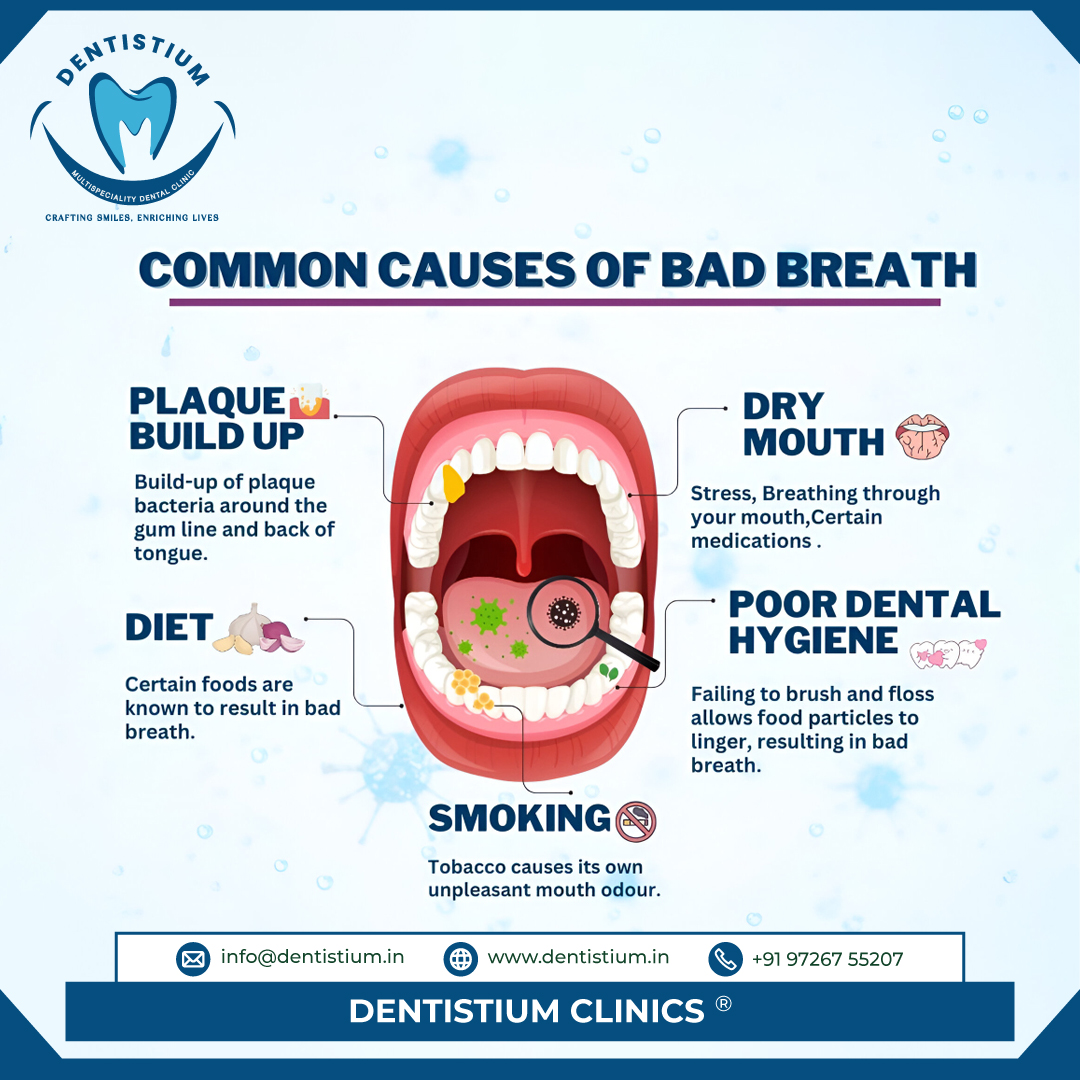
1. Plaque Build-Up

Plaque is a sticky film of bacteria that forms on teeth, gums, and the back of the tongue. When plaque is not removed through proper brushing and flossing, bacteria release foul-smelling sulfur compounds, leading to bad breath. Regular dental cleanings and daily oral hygiene are essential to prevent plaque accumulation.

2. Poor Dental Hygiene

Failing to brush and floss regularly allows food particles to remain in the mouth. These particles break down and encourage bacterial growth, which causes unpleasant odors. Brushing twice a day, flossing daily, and cleaning the tongue can significantly reduce bad breath.

3. Dry Mouth

Saliva plays an important role in washing away food debris and bacteria. Dry mouth, caused by stress, mouth breathing, dehydration, or certain medications, reduces saliva flow and increases bad breath. Drinking plenty of water and addressing the root cause of dry mouth can help maintain oral freshness.

4. Diet

Certain foods such as garlic, onions, and spicy dishes are well known for causing bad breath. These foods release strong odors that can linger even after brushing. Maintaining a balanced diet and rinsing the mouth after meals can help minimize odor.

5. Smoking and Tobacco Use

Smoking not only causes its own unpleasant odor but also dries out the mouth and increases the risk of gum disease, a major contributor to bad breath. Quitting smoking can greatly improve both oral health and overall well-being.

When to See a Dentist

If bad breath persists despite good oral hygiene, it may be a sign of gum disease, tooth decay, or other oral health issues. Regular dental checkups help identify and treat problems early, ensuring long-lasting fresh breath.


Smoking Has An Impact On Oral Health

Smoking Has An Impact On Oral Health

Smoking is a known cause of serious health risks, including lung disease and heart issues. Did you know that smoking has a significant impact on your oral well-being? At Dentistium, tobacco use often harms teeth and gums. We will examine the many ways smoking harms your mouth, how it increases the risk of oral diseases, and what measures you can take to reverse the damage.

Damage to Teeth

Staining: Staining of teeth is one of the most immediate and noticeable effects of
smoking. Teeth can appear yellow or brown due to the nicotine and tar in cigarettes.

Gum Disease: Gum disease, a serious condition that can lead to tooth loss, can be
caused by smoking. Weakening the tissues that support the teeth makes them more
susceptible to infection and inflammation.

Bad Breath: Bad breath can be caused by smoking due to the buildup of bacteria in
the mouth. Bad breath can be obscured by cigarette chemicals, making it hard to detect.

Increased Risk of Oral Cancer: Smoking increases the risk of developing oral cancer,
which can affect the tongue, lips, and throat.

Damage to Gums

Gum Recession: Smoking can cause gum recession, a condition where the gums pull
away from the teeth, exposing the roots. This can lead to tooth sensitivity and tooth loss.

Periodontitis: The destruction of the tissues that support the teeth can be caused by
periodontitis, which is a severe form of gum disease caused by smoking.

Delayed Healing: Smoking can interfere with the healing process after dental procedures,
such as tooth extractions or gum surgery.

Tips For Quitting Smoking

If you’re a smoker, quitting is the best thing you can do for your oral health. Here are some
tips to help you quit:

Talk to Your Doctor: Your doctor can provide you with advice and support to help you
quit smoking.

Consider Nicotine Replacement Therapy: Nicotine replacement therapy (NRT) can help
reduce cravings and withdrawal symptoms.

Join a Support Group: Joining a support group can provide you with encouragement and
accountability.

Make Lifestyle Changes: Making healthy lifestyle changes, such as eating a balanced
diet and exercising regularly, can also help you quit smoking.

By quitting smoking, you can improve your oral health, reduce your risk of serious health
problems, and enjoy a better quality of life.

Recent Posts

183,646 hits

  .   

Most Searched Pharmacy products on our site

 .   

 .   

Select your currency
INR Indian rupee
Add to cart